
What should never go down the kitchen drain on Thanksgiving?
Quick answer
Keep fat, pan drippings and fryer oil out of the sink completely, and keep potato peels, celery, eggshells and coffee grounds out of the disposal. Let grease cool and harden, then throw it away. Most holiday kitchen clogs start Thursday night and show up Friday morning.

Thanksgiving is the one day a year when a normal kitchen drain gets asked to handle a restaurant's worth of food waste. Three or four times the usual dishes, a roasting pan full of drippings, a mountain of peels, and sometimes a turkey fryer sitting in the driveway with three gallons of hot oil in it.
Most of what goes wrong is avoidable. Here is what we see in Charlotte kitchens every year, and what to do with each problem item before it ever reaches the pipe.
Why the day after Thanksgiving is so busy for plumbers
Plumbers have a nickname for the Friday after Thanksgiving, and it is not a polite one. It is the busiest day of the year for kitchen drain calls, and the reason is timing. The clog almost never forms during dinner. It forms Thursday night, after the dishes are done and the house goes quiet.
Here is the sequence. Warm fat goes down the sink with the dishwater and looks fine. Overnight, the drain line cools off, and that fat sets up like candle wax on the inside of the pipe, right where the kitchen branch turns or flattens out. Friday morning the family runs the dishwasher on the leftovers, somebody grinds the last of the peels, and the water has nowhere to go. In a lot of Charlotte ranches the kitchen line runs through a crawl space that sits in the 40s by late November, so the grease hardens even faster than it would in a slab house.
Turkey drippings, gravy fat and the dish soap myth
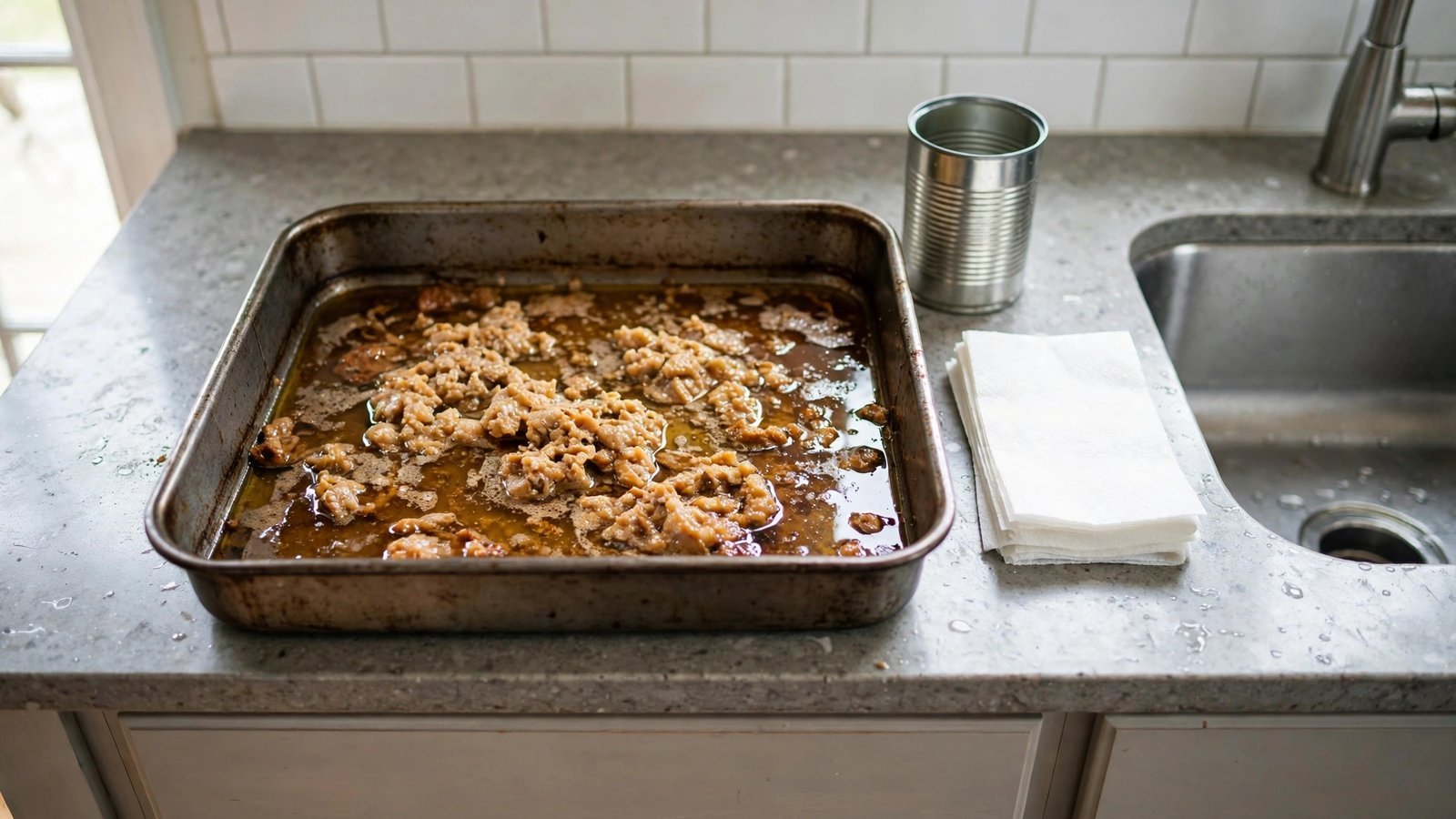
The roasting pan is the biggest single source of trouble. A 15 pound bird can leave a cup or more of fat in the pan, plus whatever you skim off the gravy, plus the butter from the mashed potatoes and the bacon from the green beans. All of it is liquid when it is warm. None of it stays liquid in a pipe.
People ask us about squirting dish soap in after it, or chasing it with a kettle of hot water. Honestly, that just moves the grease ten feet further down the line before it sets. Soap breaks it up for a minute. It does not make it disappear.
What works: pour the drippings you are not using into a coffee can or an old jar, let it go solid on the counter or in the fridge, and throw it in the trash Friday. Then wipe the pan out with paper towels before it goes in the sink. That one step with the paper towels keeps more grease out of your pipes than anything else you can do.
What to do with a turkey fryer full of oil
A turkey fryer usually takes somewhere around three gallons of peanut or canola oil. That is far more than a sink, a toilet, or the yard can absorb, so plan for it before you light the burner.
- Let it cool completely. Give it overnight at minimum. Hot oil in a plastic jug or a trash bag is a burn and a fire waiting to happen.
- Funnel it back into the jugs it came in, cap them, and put them in your regular trash on pickup day. Small amounts can be mixed with cat litter or sawdust until they are solid.
- Want to reuse it? Strain it through cheesecloth, store it sealed in a cool spot, and it will fry fish or another bird later in the season.
Do not dump it in the backyard, where it smells, draws animals and kills the grass, and never pour it into a storm drain on the street. Storm drains in Charlotte run to creeks, not to a treatment plant. If you would rather recycle it, Mecklenburg County's solid waste website lists what its full-service drop-off centers take, so check there before you load jugs in the car.
Peels, celery, eggshells and coffee grounds in the disposal

The disposal gets blamed for a lot of holiday clogs, but it is usually doing exactly what it was told. The problem is what it was fed.
- Potato peels turn into a starchy paste. Five pounds of potatoes worth of peels, ground at once, can glue itself into the trap.
- Celery, onion skins and corn husks are stringy. The fibers wrap around the impeller and slide down the pipe in long ropes that catch on everything.
- Eggshells grind into something like sand. It does not dissolve, so it settles in the low point of the trap.
- Coffee grounds do the same thing. The morning pot for a house full of guests is a lot of grounds.
Peel into the trash or a compost bucket, not into the sink. When you do use the disposal, feed it a handful at a time with a strong stream of cold water, and let it finish before adding more. If yours is already acting up, our garbage disposal repair page covers when a unit is worth fixing and when it is time for a new one.
When the sink backs up in the middle of dinner
First, stop adding water. Pause the dishwasher, because it drains into the same line as the sink and will keep pushing water up into the basin. Do not keep running the disposal, and do not pour a bottle of drain cleaner into a sink full of standing water. It rarely touches a grease clog, and whoever opens the trap later gets a face full of caustic water.
If both bowls of a double sink are full, our post on a kitchen sink clogged on both sides walks through what that tells you and what to try. A lot of people just stack the dishes, finish the holiday, and deal with it in the morning, which is completely reasonable when it is only the kitchen.
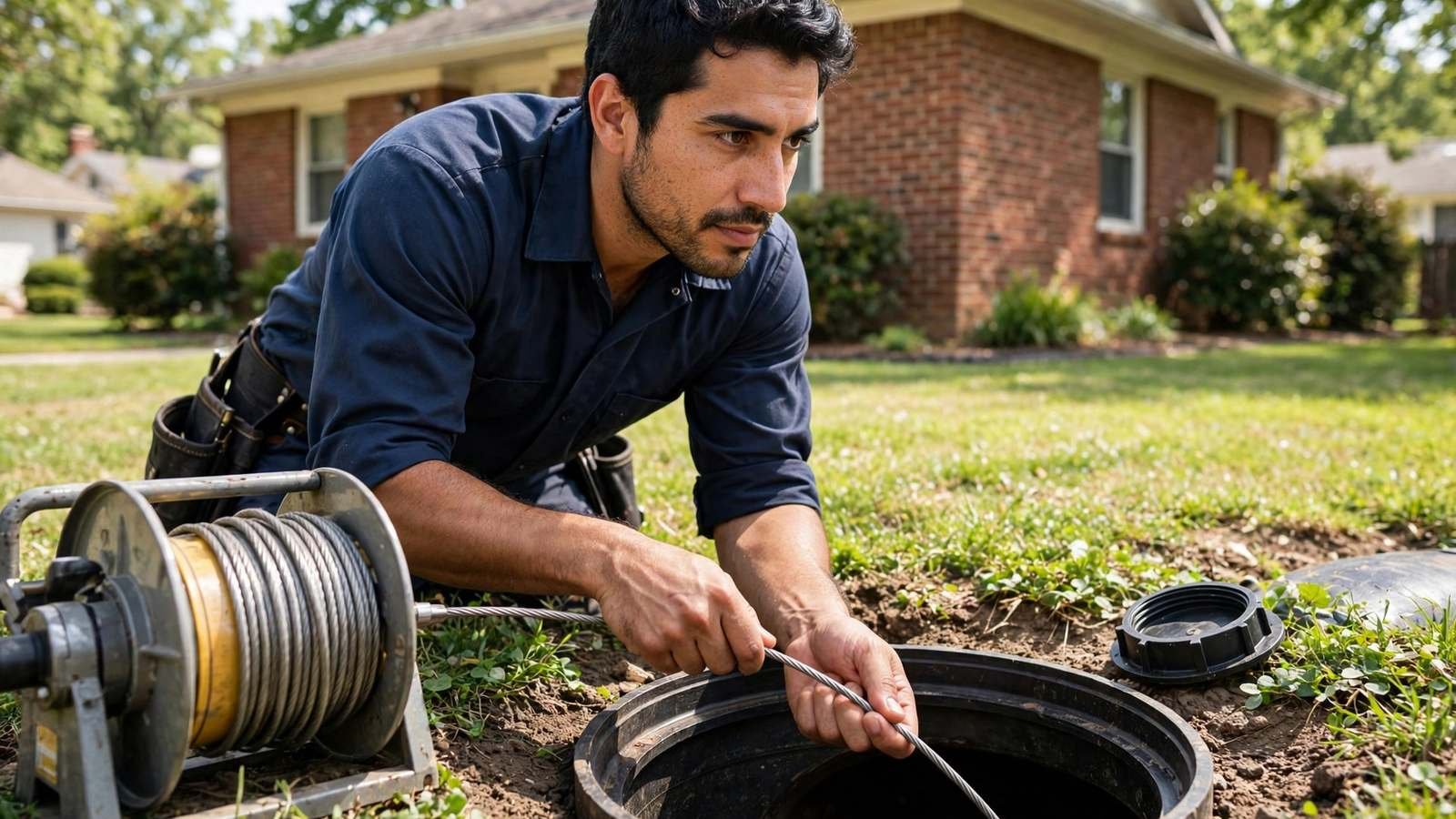
If the trap is clean and it still will not drain, the grease is in the line inside the wall and it needs a machine. We clear kitchen lines on Thanksgiving weekend like any other day, usually in the $99 to $250 range, and you get a flat price before we start. Our drain cleaning crew can run the line Friday morning while the leftovers are still in the fridge.