
How much does burst pipe repair cost in Charlotte?
Quick answer
Most burst pipe repairs in Charlotte cost $200 to $1,000. A split in an open crawl space sits at the low end, a break inside a finished wall or ceiling costs more, and a slab leak runs $1,500 to $4,000 to reroute. After hours add an $89 to $150 call-out. You get a flat price before work starts.
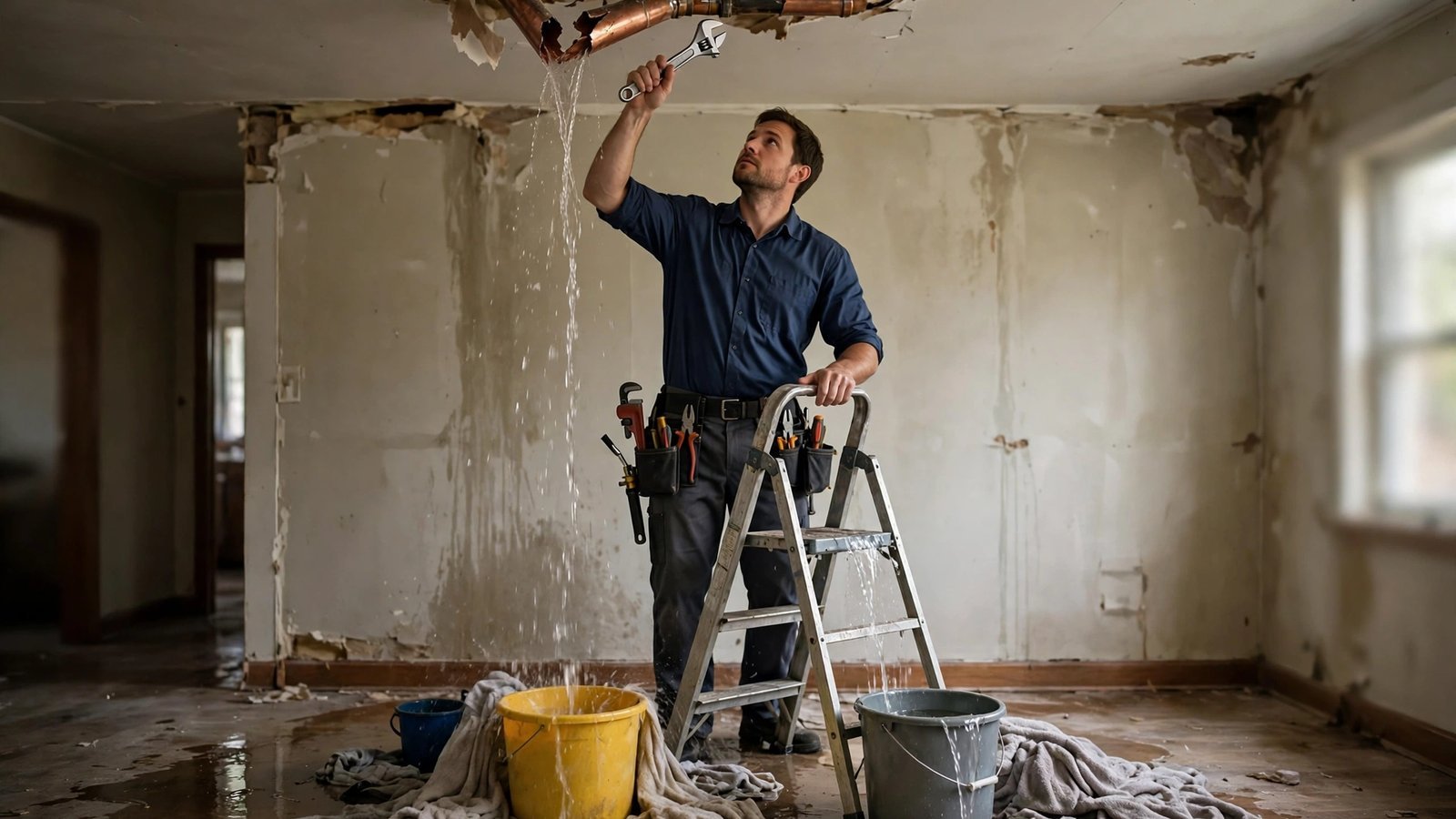
Once the water is off and the panic fades, the next question is always the same. What is this going to cost?
The honest answer is that the pipe is rarely the expensive part. A few feet of new pipe and a couple of fittings cost very little. What you pay for is getting to the break, the kind of pipe it is, and how much of the old line around it is still trustworthy. Here is how that plays out in Charlotte houses.
Burst pipe repair prices by where the break is
| Job | Typical Charlotte price |
|---|---|
| Split pipe in an open crawl space or under a sink | $200 to $500 |
| Split pipe behind the wall at an outdoor faucet | $350 to $650 |
| Break inside a finished wall or ceiling | $500 to $1,000 |
| Frozen pipe thawed and split repaired | $250 to $1,200 |
| Failed polybutylene fitting repaired | $250 to $800 |
| Slab leak, line rerouted through walls or attic | $1,500 to $4,000 |
| Slab leak, concrete opened and section repaired | $2,000 to $3,500 |
| After-hours call-out (credited toward the repair) | $89 to $150 |
Those numbers cover the plumbing: finding the break, opening what has to be opened, cutting out the bad section, splicing in new pipe and pressure testing before the water goes back on. They do not cover drying out the house or finishing drywall, which are separate trades. If you are still in the first few minutes of a burst, stop reading and go to our guide on what to do when a pipe bursts. The price can wait until the water is off.
Crawl space breaks are usually the cheapest

A lot of Charlotte homes, especially the brick ranches built from the 1950s through the 1980s, run their water lines through a crawl space. When we get a hard freeze, those lines go first, usually near a foundation vent that was left open or along the run feeding an outdoor spigot. Our post on frozen pipes in Charlotte covers why that happens and how to stop it.
The good news is that a crawl space break is about the easiest kind to fix. The pipe hangs right there under the joists. Nobody has to cut drywall. We crawl in, cut out the split, splice in a new section, and test it. That is why it sits at the bottom of the price range. What can push it up is soaked insulation hanging from the subfloor, a second split further down the same run, or a crawl space so tight that a short repair takes an hour of maneuvering.
Walls and ceilings: the pipe is cheap, the access is not
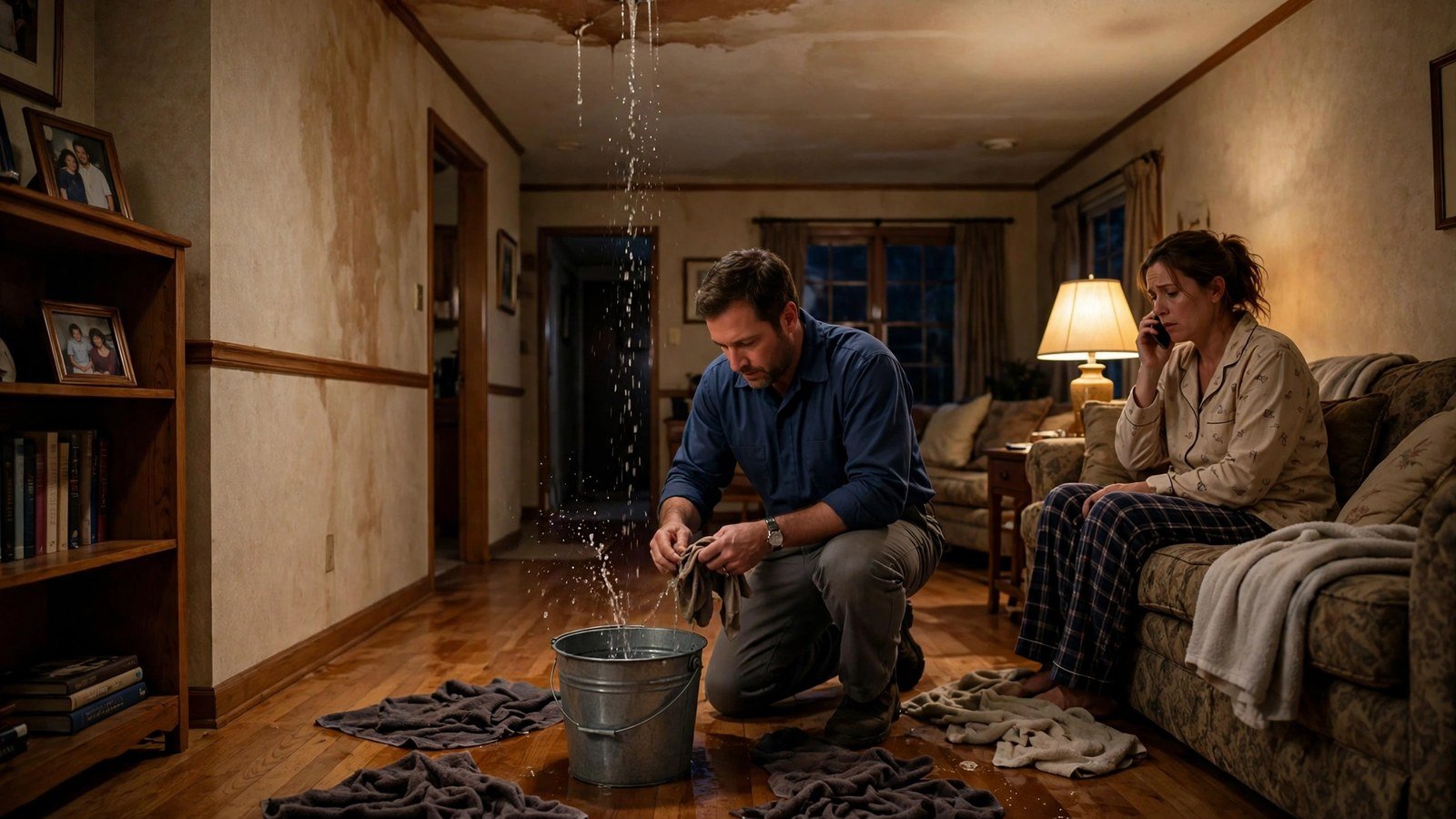
When a pipe breaks inside a finished wall or above a ceiling, the plumbing repair is nearly the same as in a crawl space. The difference is everything around it. The drywall has to come open, sometimes in a spot where cabinets, a shower or a tile backsplash are in the way. And the water usually shows up somewhere other than the break, because it runs along the top of the drywall or down a joist before it finds a way out.
We try to locate the break before we cut, so the opening stays the size of the repair and not the size of the stain. Ceilings under upstairs bathrooms and laundry rooms are the classic case, and so are exterior walls on the north side of the house during a freeze. Once the pipe is fixed and tested, we leave the opening clean and ready for drywall. Patching, mud and paint usually go to a drywall contractor or a handy homeowner.
A break under the slab is its own category. Many newer homes in south Charlotte and the outer towns are built on slabs, and those breaks cost more because the line is under concrete. Rerouting the line through the walls or attic is often cheaper than breaking up the floor. Our slab leak repair cost guide goes through both options.
What the pipe is made of matters as much as where it is

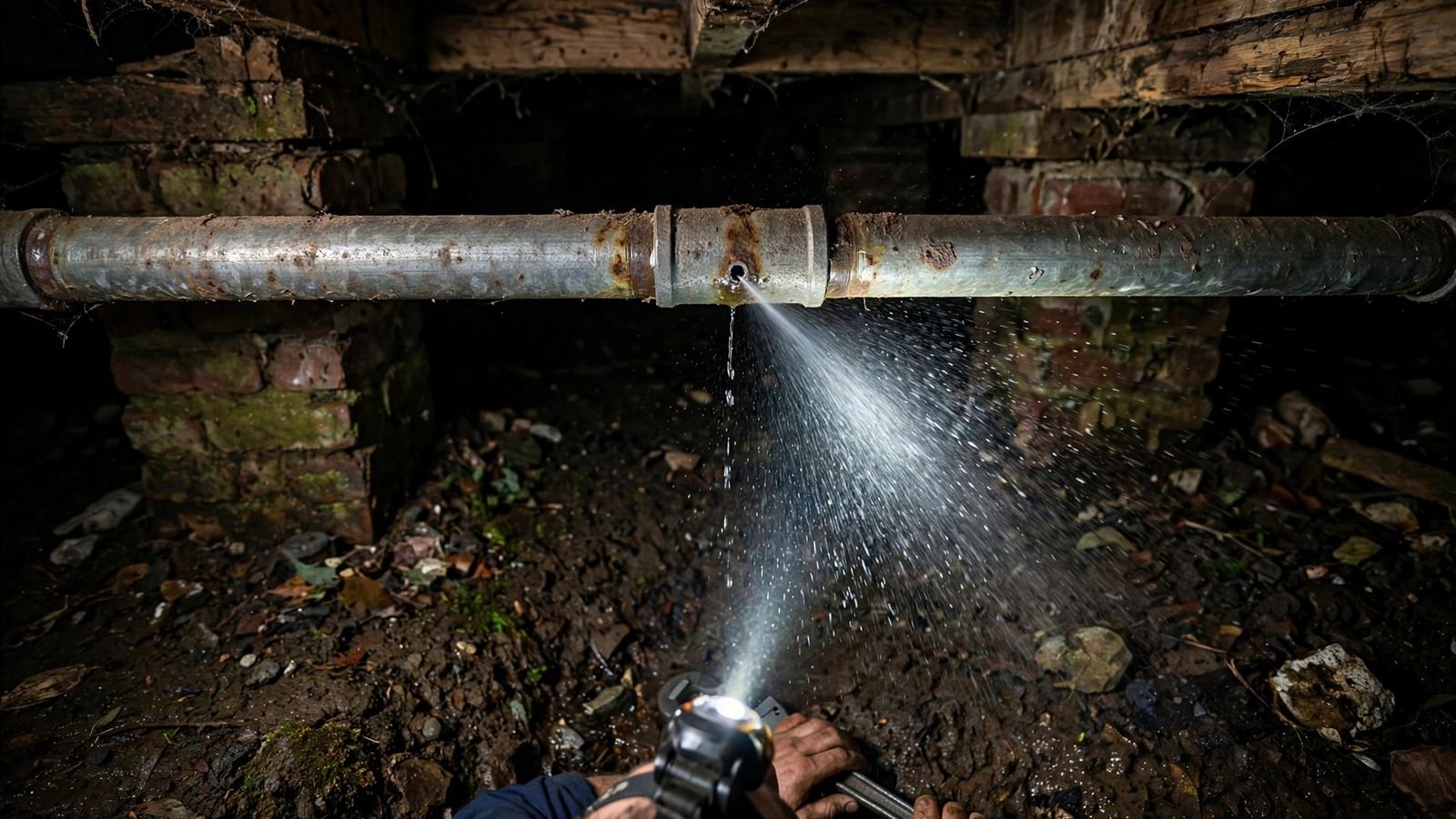
Two houses can have a split in the same spot and get very different repair bills because of what the pipe is made of. Here is what we run into across the metro:
- PEX. The flexible plastic line in most homes built or repiped in the last twenty years. It stretches a bit when it freezes and survives more often than copper, though it can still split, and the brass or plastic fittings can crack. Repairs are quick, using crimp or expansion fittings, so PEX usually lands at the low end.
- Copper. Common in homes from the 1960s through the 1990s. Freezing usually splits copper along its length, sometimes a long way from the ice. We cut back to sound pipe and join it with solder or press fittings. The price depends mostly on access.
- Polybutylene. The gray plastic pipe used in a lot of Charlotte subdivisions from the late 1970s into the mid 1990s. It tends to fail at the fittings, often with no warning. We splice in PEX with transition fittings. Our polybutylene guide explains why one failure usually means more are coming.
- Galvanized steel. Found in mill houses and older homes from before the 1960s. It rusts from the inside, so a burst is usually a corroded joint or a pinhole rather than a freeze. The repair costs more than copper or PEX because the threaded joints are often rusted solid, and the pipe next to the break is just as thin. We usually replace the run back to the next solid joint with PEX.
Fix the break or replace the line?
For one split caused by a freeze in otherwise healthy pipe, fix the break and move on. There is no reason to replace a sound copper or PEX system because of one cold night. Sleeve the pipe, close the vent, and it will likely never happen again.
It is a different story when the pipe itself is the cause. If this is the second or third polybutylene fitting to fail, or the galvanized line is putting out rusty water and leaking at the joints, every repair is just buying time until the next one. That is when we tell people to price a repipe, which runs about $4,000 to $8,000 for a typical Charlotte home. We will show you the old pipe and price the repair and the repipe so you can decide.
If a pipe has burst at your place, call us at (704) 419-7362, day or night. We will help you get the water off over the phone and give you an exact flat price before any work starts. Our burst pipe repair page covers how we handle it from there.