
Why does my water heater pilot light keep going out?
Quick answer
If the pilot dies the moment you let go of the knob, the thermocouple is usually bad. If it stays lit for hours or days and then quits, look at a clogged flame arrestor, a tripped thermal switch, a dirty pilot, or wind and drafts pushing down the flue.

A pilot that goes out once is a nuisance. A pilot that goes out every few days is the heater telling you something specific, and the timing of when it quits is the best clue you have. We get a run of these calls every fall, right when the first cold, windy nights roll through Charlotte.
If the heater simply has no hot water and you have not looked at the pilot yet, start with our no hot water checklist. This post is for the pilot that you relight and then lose again.
Pay attention to when it goes out
Here is the sorting question we ask on the phone. Does the pilot die as soon as you release the pilot knob, or does it light, run fine, and then go out later?
Dies right away usually points at the thermocouple. That is the thin copper lead whose tip sits in the pilot flame. When it gets hot it makes a tiny electrical signal that tells the gas valve a flame is present and it is safe to keep gas flowing. A worn thermocouple can't make enough signal, so the valve shuts the pilot gas off the second you stop holding the button. Some heaters use a thermopile instead, which is a beefier version of the same idea, and it fails the same way.
Lights fine but quits hours or days later is a different list. That is usually airflow, a dirty pilot, a thermal switch, or something going on with the gas supply or the flue.
The flame arrestor and thermal switch on newer tanks

Gas tanks built in the last twenty years or so are FVIR units, short for flammable vapor ignition resistant. The combustion chamber is sealed, and air comes in through a flame arrestor screen near the bottom of the tank. It is there so spilled gasoline fumes in a garage can't get pulled into the burner and flash.
The catch is that the screen clogs. Lint from a dryer in the same room, garage dust, pet hair, leaves blown in under the door. When it clogs, the burner starves for air, the chamber runs hot, and a thermal cutoff switch opens and kills the pilot. Some brands use a resettable button, some use a one-time switch that has to be replaced. Either way, resetting it without cleaning the arrestor just buys you a few more days.
If your heater sits next to the washer and dryer, or in a dusty garage, this is the first thing we look at. Vacuuming around the base every few months helps a lot.
Dirty pilots, drafts, and wind down the flue
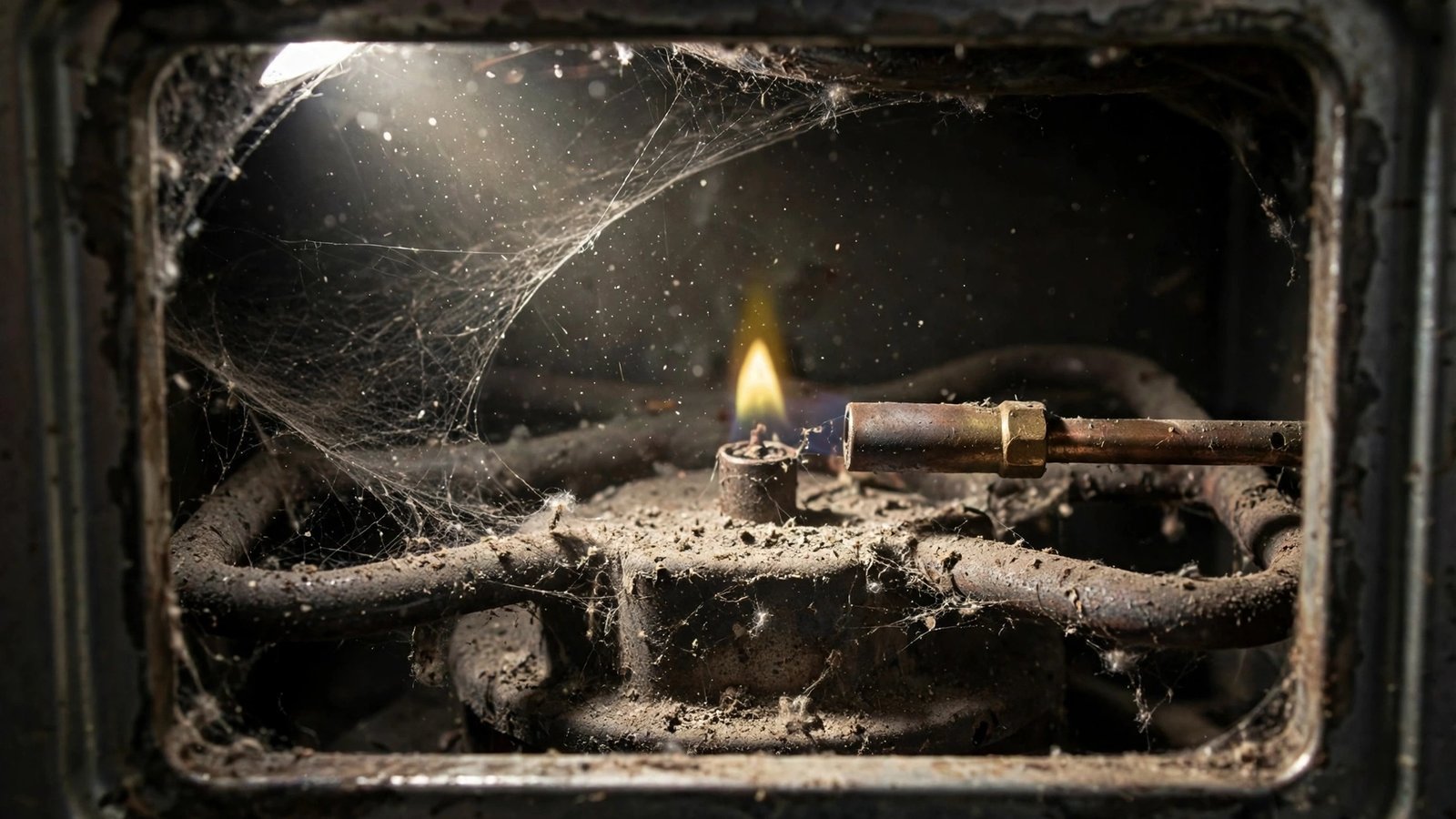
A healthy pilot is mostly blue and wraps around the tip of the thermocouple. A lazy yellow flame that barely touches it means the pilot orifice is partly plugged with dust or, honestly, spider webs. We see a lot of webs in garage and crawl space heaters. The flame still lights, but it doesn't heat the thermocouple enough, and any little puff of air knocks it below the line.
Drafts matter more than people think. A garage door that opens right beside the tank, a box fan, a window left cracked. Each one can push enough air across the base to snuff a weak pilot.
Then there is the flue. On a cold, gusty night in Charlotte, wind can blow down the vent pipe and out across the burner. It gets worse when the vent cap is missing or bent, when the heater shares a chimney with the furnace, or when bath and kitchen fans are pulling air out of a tight house. If the pilot only goes out on windy nights, that is a strong hint. Downdraft is also the situation where combustion gases can spill back into the house, so if you see scorch marks at the top of the tank, or you don't have a carbon monoxide alarm near the heater, fix both.
When the problem is the gas, not the heater
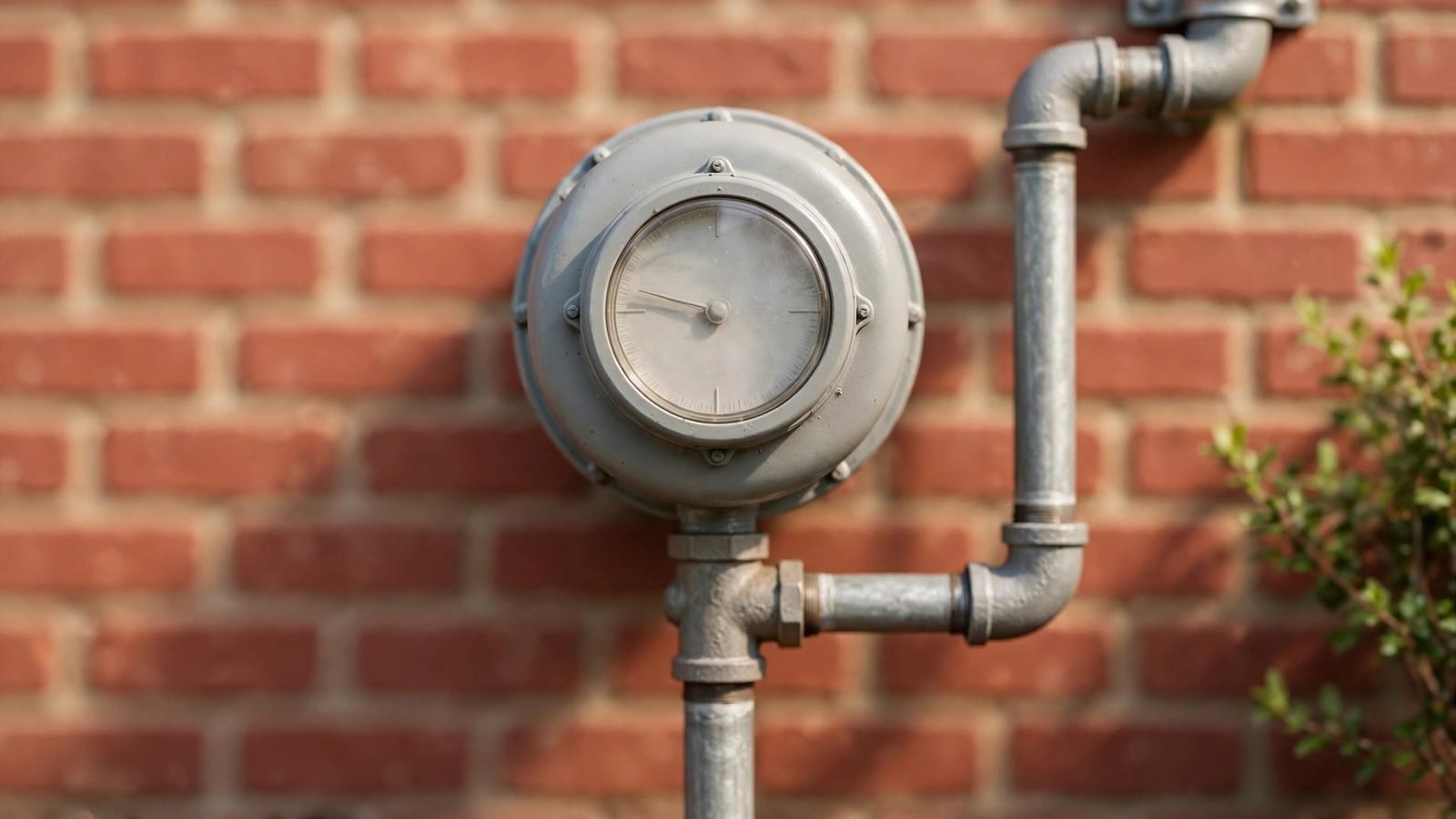
Sometimes the heater is fine and it is just not getting steady gas. The shutoff valve on the line to the heater may be partly closed after someone worked on it. A kinked or undersized flex connector can starve the pilot when the furnace and range are running at the same time. Homes on propane out past the city water lines lose the pilot when the tank runs low. And if Piedmont Natural Gas had the gas off for meter work, air in the line can take a few relight tries to clear.
The gas control valve itself also fails. When the thermocouple tests fine and the pilot still won't hold, the valve is next. That repair usually lands in the $150 to $450 range, and a thermocouple alone usually runs $150 to $250. On a tank past twelve years, we will tell you straight that the money may be better spent on a replacement.
Relighting it safely, the way the label says
Every gas water heater has lighting instructions printed on the tank. Follow yours, because brands differ a little. The general steps go like this:
- Turn the control knob to off and wait the time the label lists, usually around five minutes, so any gas in the chamber clears.
- Sniff near the floor around the heater. If you smell gas, stop right there.
- Turn the knob to pilot, press and hold it, and click the built-in igniter until you see flame through the sight glass.
- Keep holding for the time the label asks, often close to a minute, so the thermocouple heats up. Then release and turn the knob to on.
Do not take the inner burner door off an FVIR heater or try to light it with a match or long lighter. Those units are sealed for a reason. If the igniter clicks and nothing lights after a few tries, leave it for a plumber.
If you smell gas, the pilot can wait

A faint whiff right after relighting can happen. A strong rotten egg smell, or one that hangs around, is different. Don't relight anything, don't flip switches, and get everyone out. Call Piedmont Natural Gas or 911 from outside, well away from the house. Our smell gas guide walks through the exact order.
Once the utility has made it safe, the leak still needs a real repair. That is where our gas line repair crew comes in. And if the pilot just won't stay lit and you are tired of crawling around with a flashlight, call us at (704) 419-7362 for water heater repair. We test the thermocouple, clean the pilot and arrestor, check the flue, and give you a flat price before anything gets replaced.