
Hydro jetting in Charlotte, NC
Same drain, same backup, every few months? Snaking punches a hole through the clog and leaves the rest stuck to the pipe. We camera the line first, then jet it clean wall to wall, so the fix lasts years instead of weeks.
Snake or jet: how we decide

Most clogs don't need a jetter. A hair plug in a tub drain or a kid's toy in a toilet, a cable machine handles that in twenty minutes and we'd be wasting your money to bring out the big rig. Jetting earns its keep on a different kind of problem: the line that keeps coming back.
Here's why. A cable spins a cutting head down the center of the pipe. It opens a channel maybe two inches wide, water starts flowing, and everybody's happy for a while. But the grease or root mass that caused the trouble is still clinging to the walls, and it catches the next round of food scraps and paper. A jetter is a different animal. It pushes water through a nozzle at around 3,000 to 4,000 PSI, with rear-facing jets that pull the hose forward and scrub the full circumference of the pipe as it goes. When we reel it back, the debris washes down to the main.
So if you've had the same line snaked twice in a year, that's usually our cue to suggest jetting instead.
The three things jetting is best at
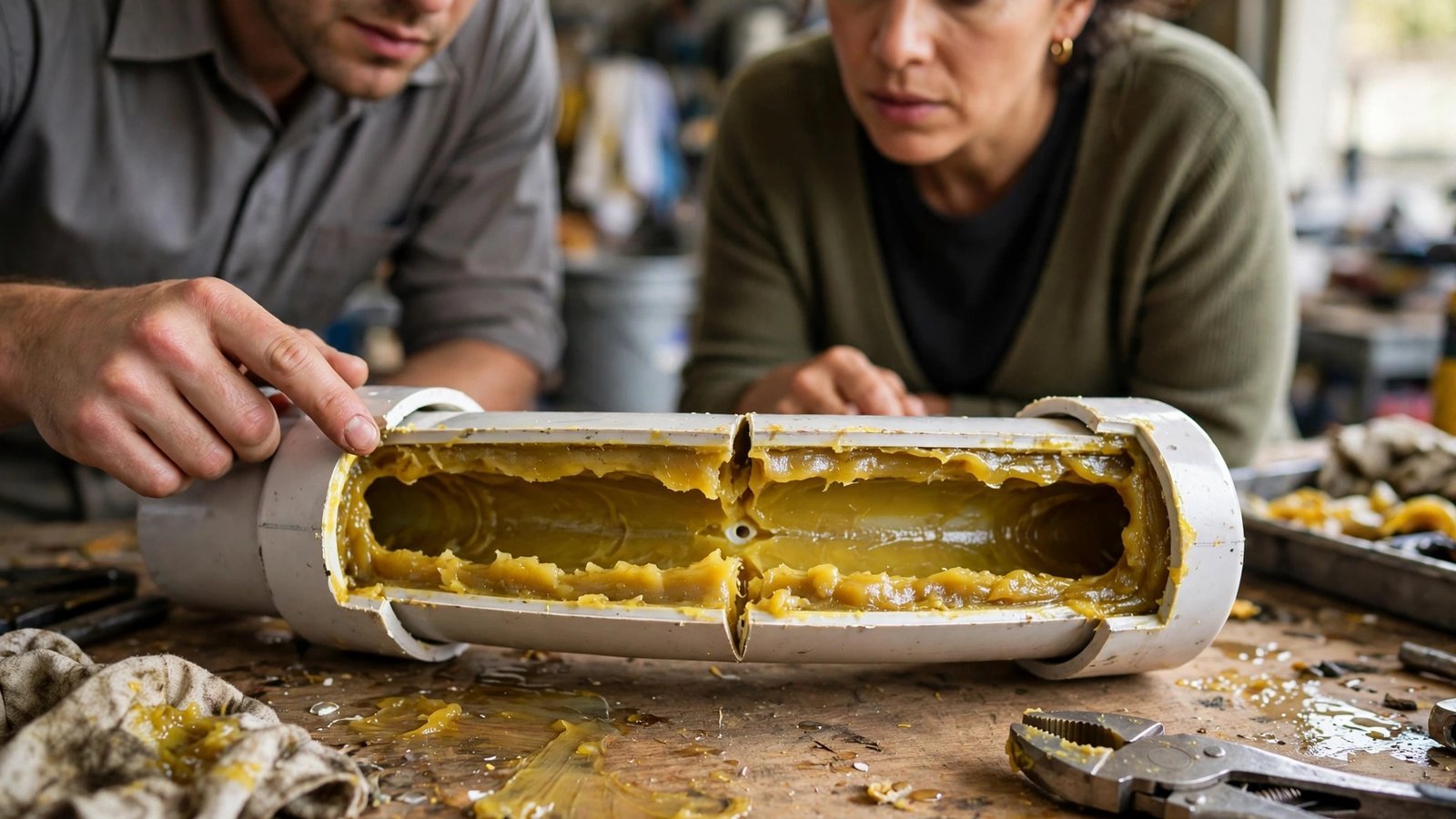
- Kitchen grease. Bacon fat and cooking oil go down warm and harden on the pipe wall a few feet in. Over a few years a two-inch kitchen line can close down to the size of a pencil. A cable pokes through it. Hot water at high pressure strips it off.
- Roots. A root-cutting nozzle chews through the hair-like mass that grows inside a sewer joint and flushes it out.
- Scale and sludge. Old cast iron builds up a rough crust inside, and that rough surface snags everything. Jetting knocks it back so the pipe drains like it should.
We're a residential outfit. You'll see jetters behind restaurants every week because commercial kitchens fill their lines with grease fast, but our work is houses, and a home kitchen line that gets jetted once usually stays clear for years if nobody keeps pouring fat down it.
Why the camera goes in before the jetter
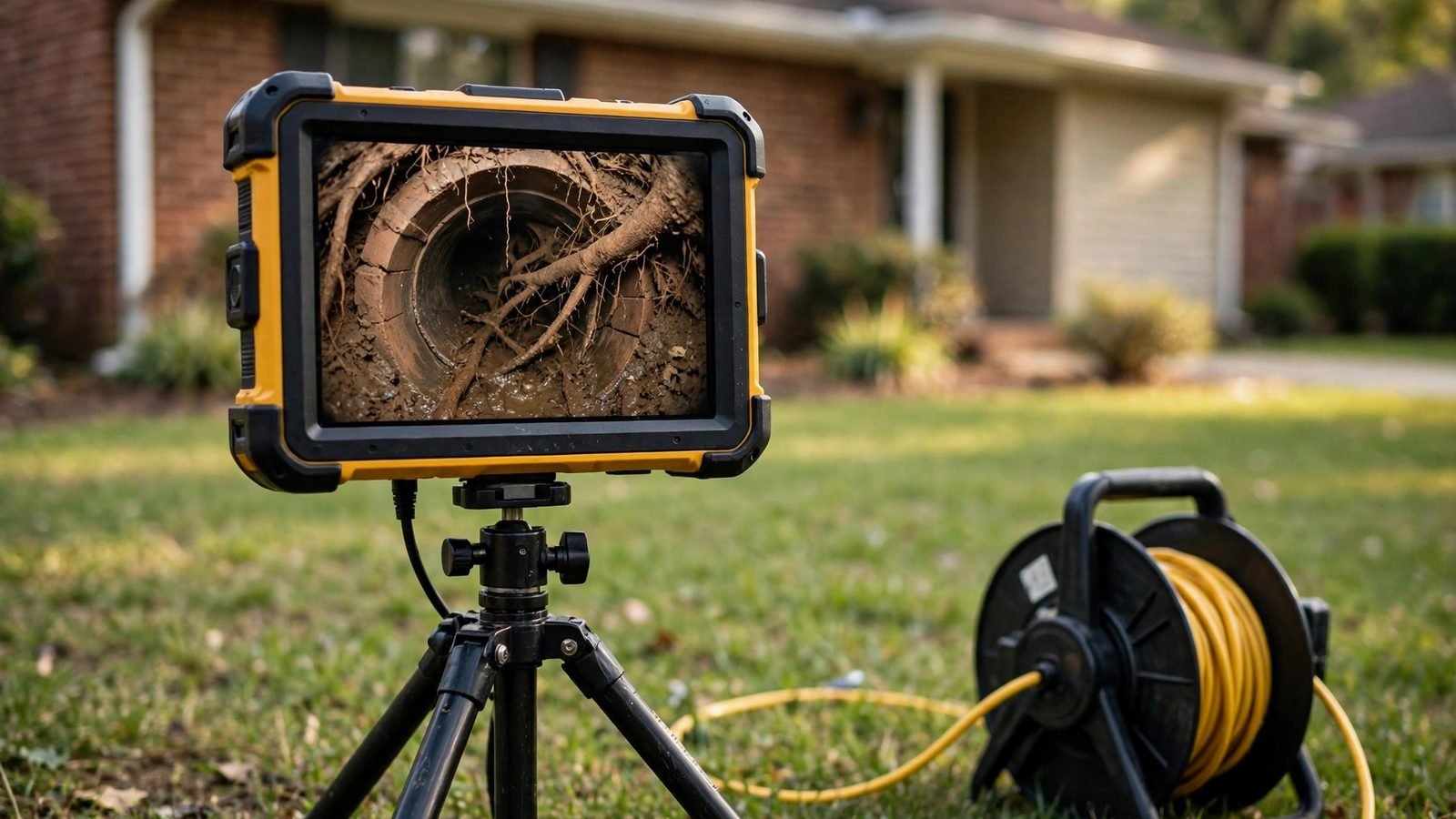

Several thousand PSI is great on a sound pipe and bad news on a failing one. So on any older home we run a camera down the line first and you watch the screen with us. We're looking for three things: what the blockage actually is, what the pipe is made of, and whether the pipe is still in one piece.
We won't jet a line that's cracked open, crushed, or missing a section. We also go easy on, or skip entirely, two older materials. Clay tile laterals that are already broken at the joints can lose pieces when you hit them hard. Orangeburg, the tar-paper pipe some builders used in the 1940s through the 60s, tends to flatten and blister with age, and a jetter can tear right through it. If the camera shows either of those in bad shape, jetting is the wrong tool and we'll tell you so. That's when you're looking at sewer line repair instead of cleaning.
Willow oaks and clay pipe in the older neighborhoods

If you live in Myers Park, Dilworth, Plaza Midwood, or Elizabeth, you've got two things working against your sewer: big willow oaks along the street and a clay lateral that's been in the ground since before your parents were born. Clay pipe comes in short sections joined at bell-and-spigot joints. The old mortar or packing in those joints shrinks over the decades, a little moisture escapes, and the roots find it. Every spring they push in a bit further.
Jetting with a root nozzle clears them out clean, and you'll feel the difference the same day. We'll be straight with you about what comes next, though. The joint that let them in is still open, so they'll grow back. For a lot of folks, jetting every year or two is a perfectly reasonable way to manage it. For others, the footage shows it's time to line or replace that stretch. We show you the video and let you choose.
Pricing and what a visit looks like
Residential hydro jetting around Charlotte generally lands between $350 and $700. Heavy root intrusion or a long run out to the street pushes it toward the top. Compare that with $150 to $400 for snaking, and a camera inspection runs about $150 to $300 if it isn't already part of the job. Jetting costs more on day one. On a line that's been snaked three times this year, it's usually the cheaper option over twelve months.
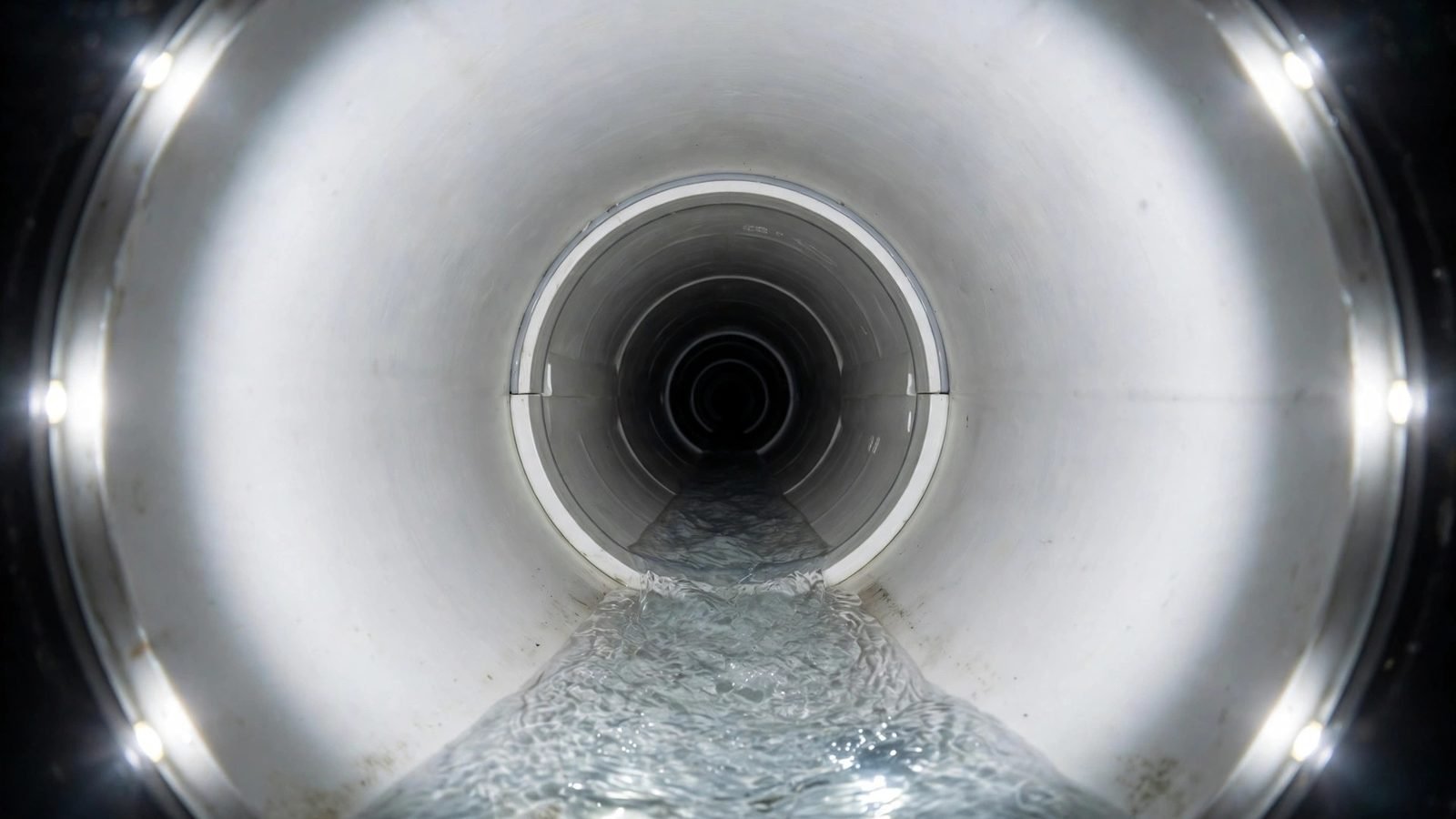
A typical visit: we find or open the cleanout, run the camera, talk you through what we see, quote a flat price, then jet. Afterward we send the camera back down so you can see clean pipe for yourself. More numbers are in our hydro jetting cost guide.
Hydro jetting questions
Is hydro jetting safe for old pipes?
For sound pipe, yes, including old cast iron and clay that's still intact. The risk is pipe that's already cracked, collapsed, or made of Orangeburg. That's why we camera older lines first. If the footage shows the pipe won't take the pressure, we don't jet it, and we'll walk you through repair options instead.
How long does hydro jetting last?
On a grease clog in a home kitchen line, often several years, as long as fat stays out of the sink. Root problems are different. Jetting clears them, but the roots return through the same open joint, usually within one to two years. A camera check afterward tells you how fast your line is likely to need it again.
How long does a hydro jetting job take?
Most residential jobs take one to three hours, camera inspection included. A short kitchen branch can be done in an hour. A long main line with heavy roots out to the street takes longer. If there's no outdoor cleanout, we may need extra time to get access through a roof vent or a toilet flange.
Can hydro jetting remove tree roots?
Yes. A root-cutting nozzle spins and slices through root masses inside the pipe, and the water flushes the pieces out to the main. It doesn't seal the joint the roots came through, so they will grow back eventually. For a permanent fix, that section of pipe needs to be lined or replaced.
Do I need hydro jetting or regular drain cleaning?
If it's the first clog in that drain, regular cable cleaning is usually enough and costs less. If the same line keeps backing up, if it's a kitchen line full of grease, or if a camera shows roots or heavy scale, jetting is the better value because it cleans the whole pipe instead of a narrow path.
What Charlotte Homeowners Say
We're new to Charlotte, and we're building our reputation the only honest way there is: one job at a time, done right, at the price we quoted. Every Hornets Nest job comes with flat-rate pricing, a licensed and insured crew, and a real person answering the phone 24/7.
Tired of the same clog coming back?
Call and tell us which drain it is and how often it backs up, and we'll tell you whether it needs a jetter or just a snake.
📞 Call (704) 419-7362