
Tankless water heater installation & repair in Charlotte, NC
Thinking about going tankless, or is the one you have throwing an error code? We install, size, flush and repair gas and electric tankless units across the Charlotte metro, and we will tell you straight if a tank makes more sense for your house.
Gas or electric tankless for a Charlotte house
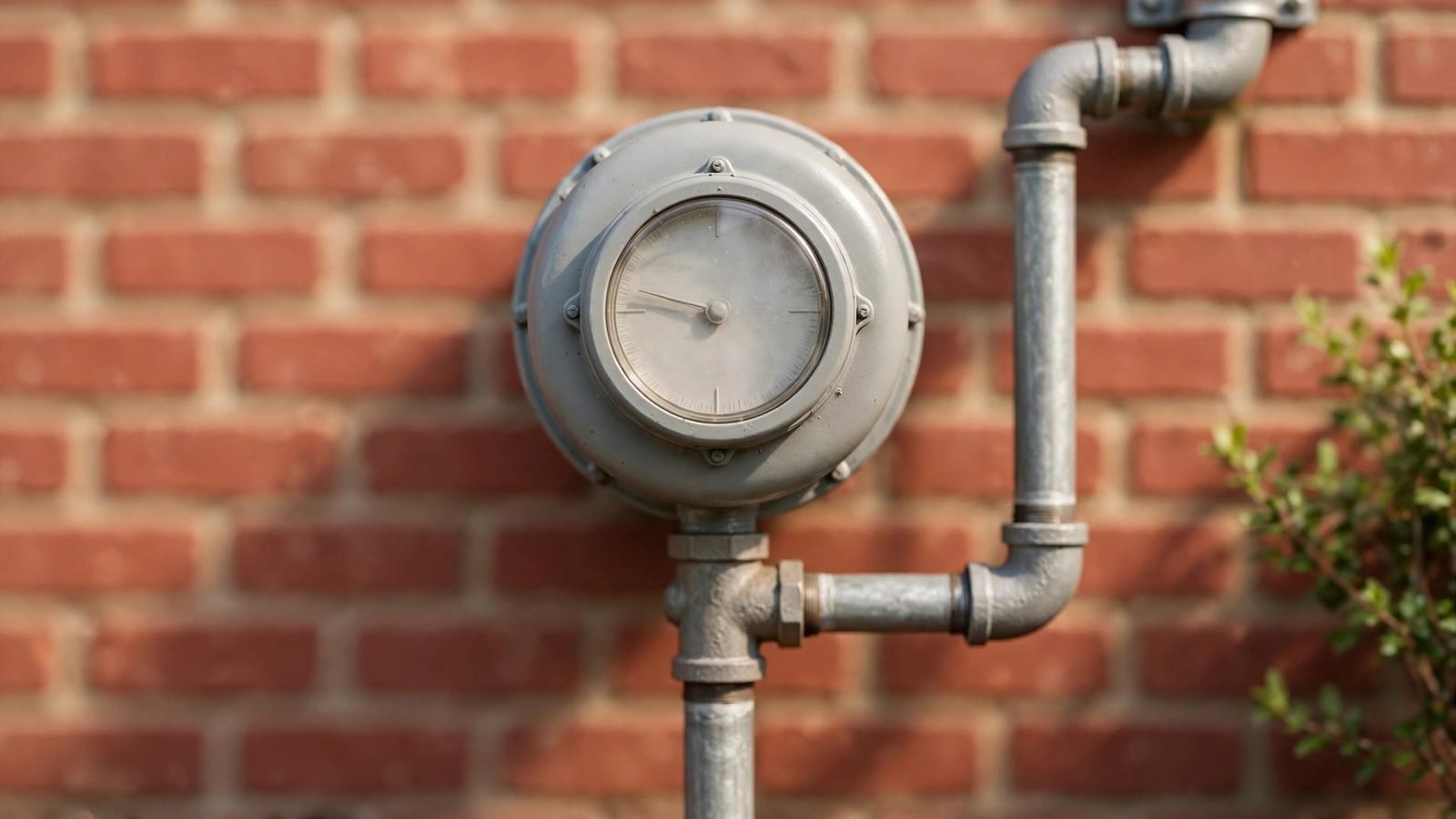
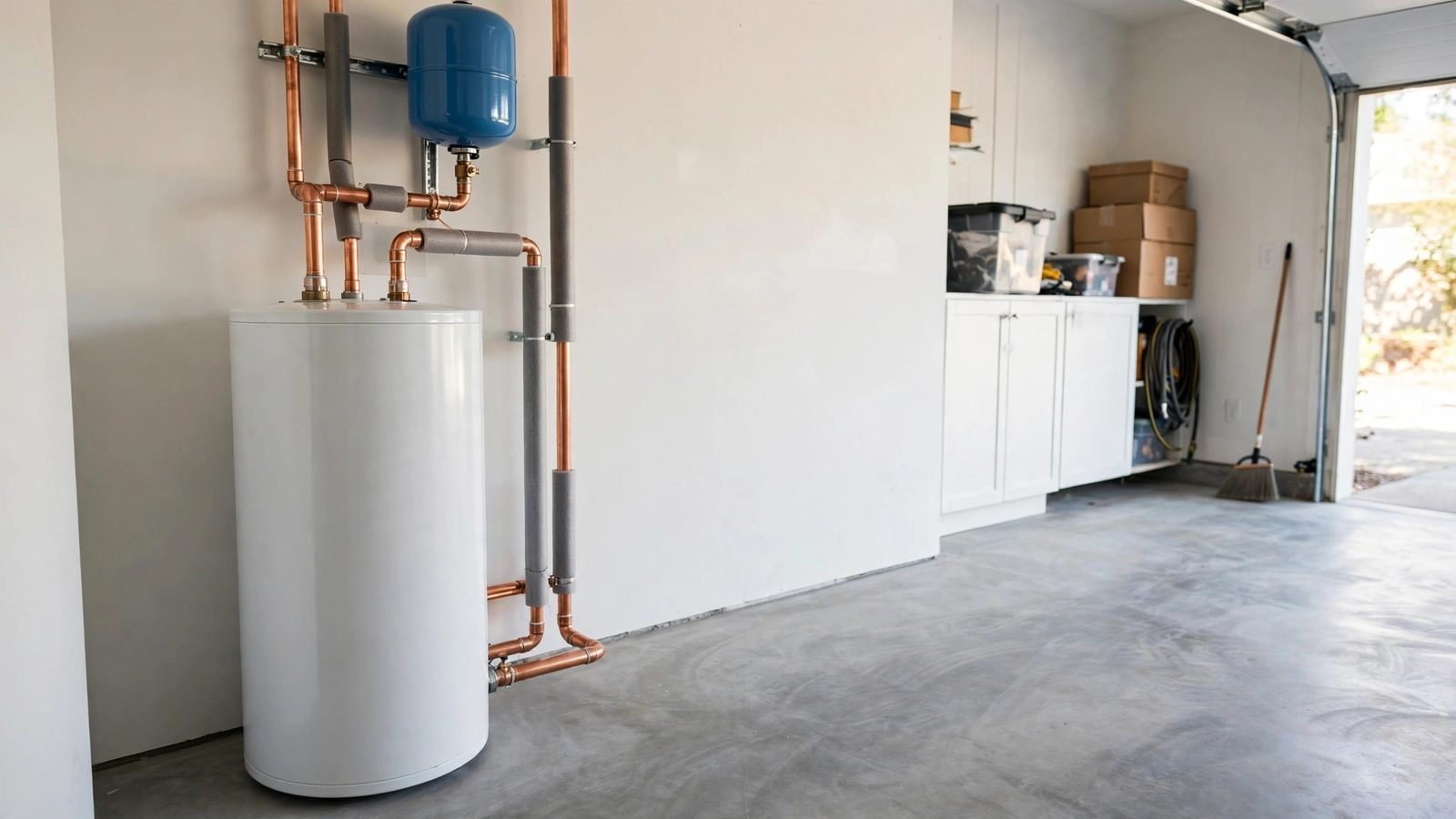
Most tankless units we put in around Charlotte burn natural gas, and the reason is simple. A gas unit fires at up to 199,000 BTU, which is enough to run two showers and the dishwasher at the same time. If you already have gas at the house for a furnace, range or the old tank, gas tankless is almost always our pick.
Electric is harder. A whole-house electric tankless unit can pull 120 to 150 amps by itself. Plenty of 1970s and 80s ranches in Charlotte still have a 100 amp panel, so going electric there means a service upgrade before the heater even goes on the wall. We rarely think that is money well spent. A small electric point-of-use unit under a far bathroom sink is a different case. It is cheap, it fixes the long wait for hot water at that one spot, and it needs nothing more than a dedicated circuit.
Sizing for a January morning, not a July one
Tankless heaters are rated by gallons per minute at a certain temperature rise, and the rise is what trips people up here. Charlotte Water pulls from the Catawba River lakes. In summer the water comes out of the ground fairly warm. In January it can arrive at your house in the high 40s, so the heater has to lift it about 70 degrees to reach 120. A unit the brochure calls an 8 gallon heater may only give you 5 on a cold morning.
We size for the worst week of the winter. Count what actually runs at once on a school morning. Two showers at roughly 2 gallons a minute plus a kitchen faucet comes to 5 or 6 gallons a minute, which puts most families in a 180,000 to 199,000 BTU gas unit. A couple in a townhome can go smaller. A big house with a soaking tub and a multi-head shower may need two units piped together. Undersize it and the shower goes lukewarm every time somebody starts the washer.
The gas line and vent work most quotes gloss over
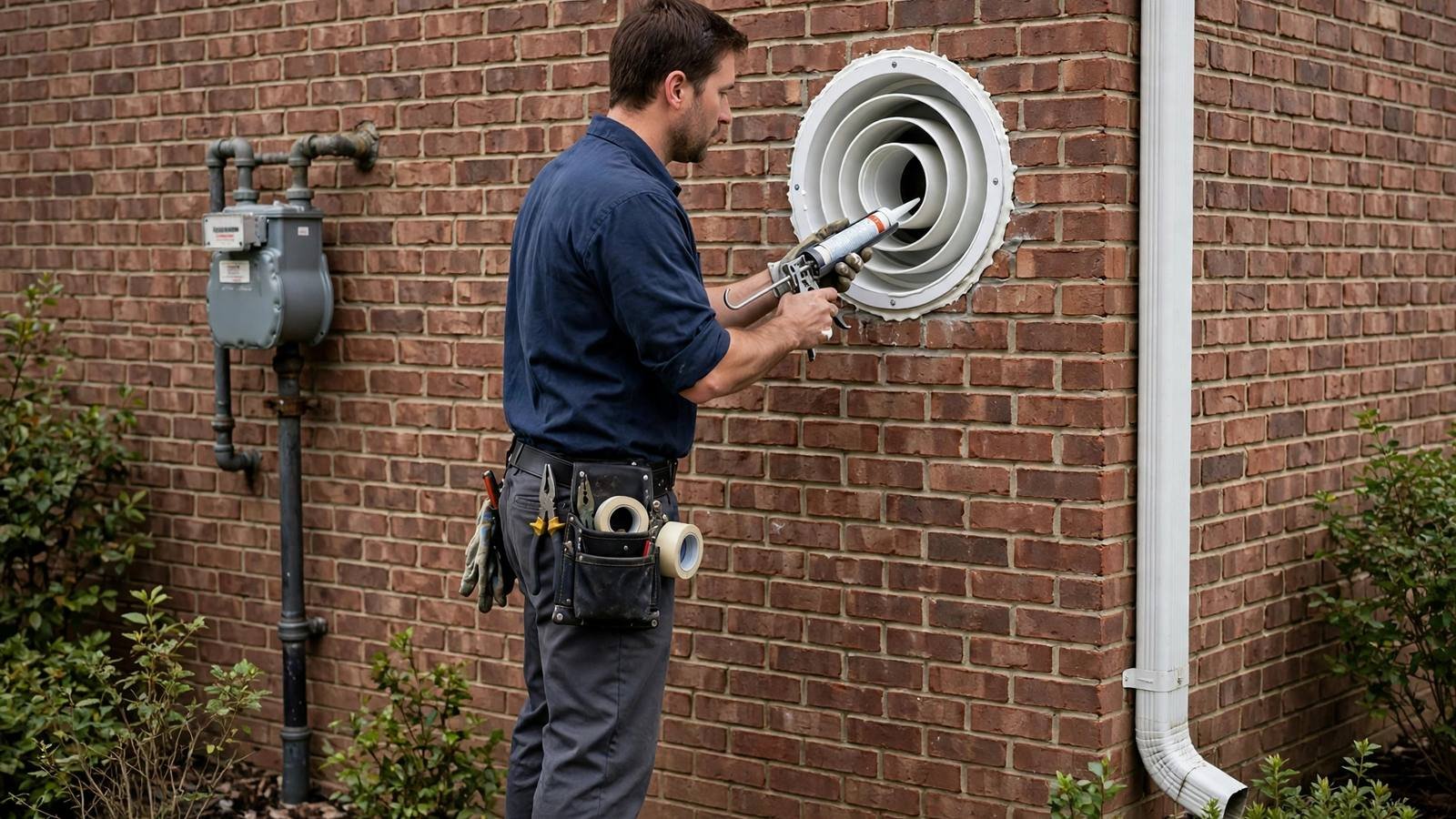
A 40 gallon gas tank burns about 40,000 BTU. A tankless unit at full fire burns close to five times that, and the half inch line that fed your old heater usually cannot carry it. We measure the run back to the meter, add up every gas appliance in the house, and in most homes run a new 3/4 inch line to the heater. A starved gas line is the most common problem we find on tankless units someone else installed. It shows up as ignition errors and water that swings hot and cold.
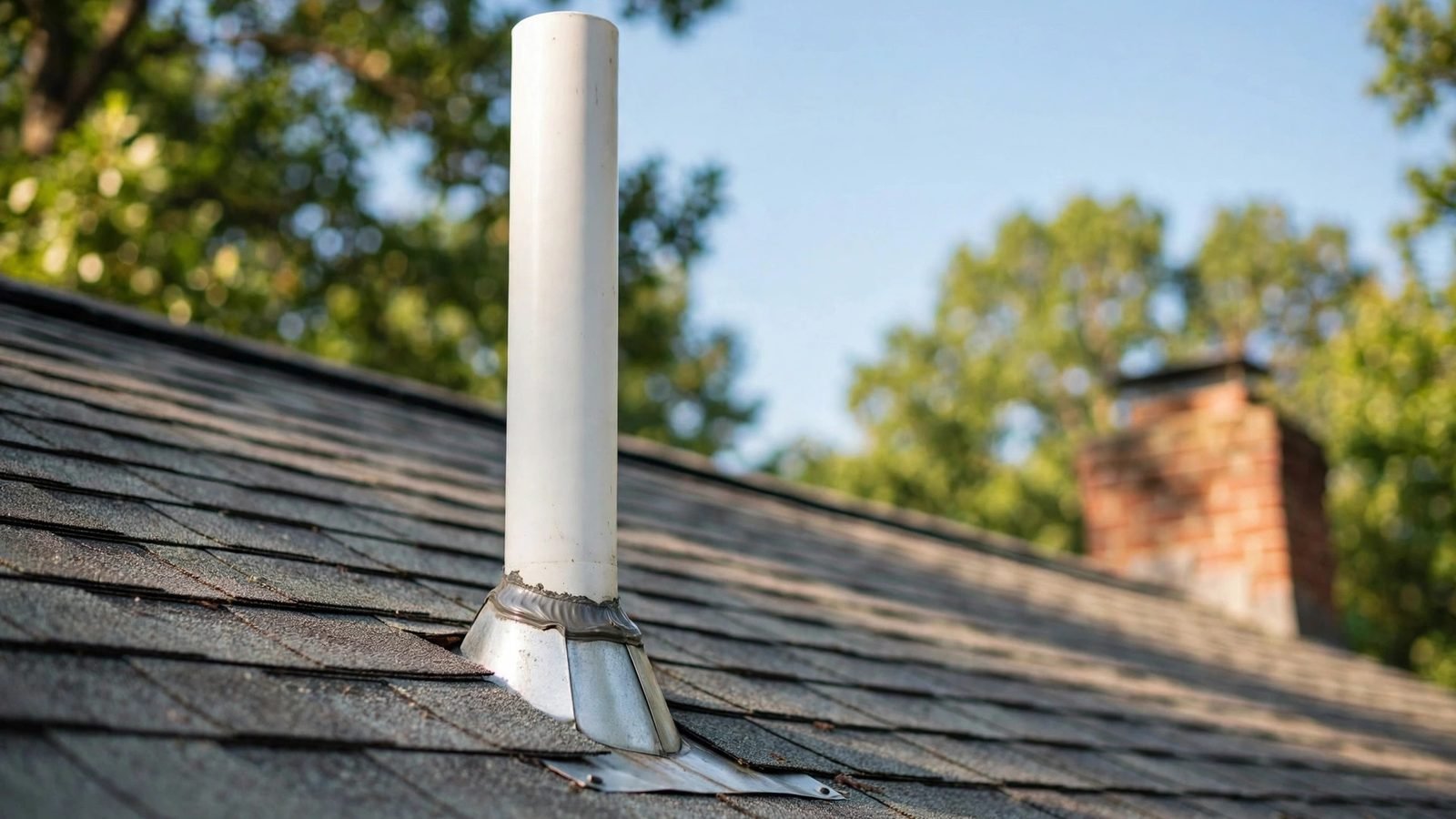
Venting changes too. Condensing units vent in PVC and can usually go straight out a sidewall. Non-condensing units need stainless vent pipe. Either way, the old metal flue from the tank does not get reused. Moving the heater out of the attic and onto a garage or exterior wall often solves the vent route and the attic flood risk in one move. The gas line upgrade and new vent are most of why tankless runs about $3,300 to $5,200 installed in Charlotte, compared with $1,300 to $2,500 for a standard tank. That includes the Mecklenburg County permit, and you get a flat price before any work starts.
Descaling, error codes and the repairs we see
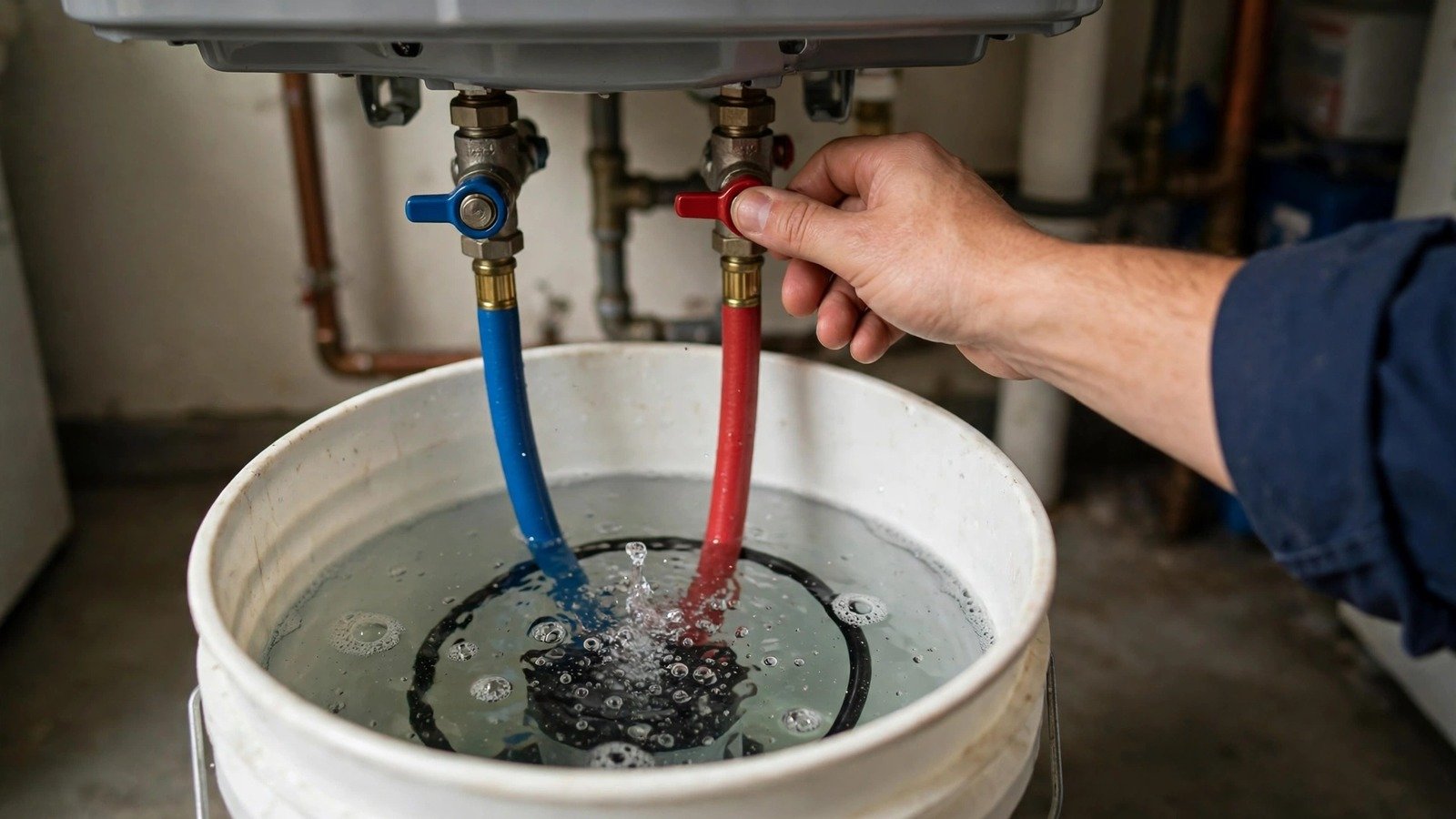
Our water is on the soft side, which helps, but a tankless heat exchanger still builds scale. We descale with a small pump and a descaling solution circulated through the service valves for about an hour. Manufacturers usually ask for it yearly. On Charlotte city water every one to two years is normally fine, though a house on a hard well out in Union or Gaston County should stick to once a year. If your unit was installed without service valves, we add them on the first visit so future flushes are quick.
Error codes we get called about most:
- Rinnai 11 or Navien E003: no ignition. Often a gas valve left closed after other work, low gas pressure, or an undersized line.
- Rinnai 12: flame lost mid-run. We check gas pressure, the vent and the flame rod.
- Rinnai 10: blocked intake or exhaust. Wasp nests and leaves in the vent cap cause more of these than you would expect.
- Rinnai LC: scale buildup. The unit is asking for a flush.
Past codes, the usual repairs are a clogged inlet filter screen, a bad flow sensor, or a unit on an exterior wall that froze when the power went out during a cold snap. Most land around $150 to $450. Our water heater repair crew works on tanks and tankless alike.
When we tell people to buy a tank instead

We install a lot of tankless heaters, and we still talk a fair number of people out of them. If your current tank keeps up with your family, if you are selling in the next few years, or if the old heater quit this morning and you want hot water tonight, a tank is the better buy. It costs about half as much, nearly any plumber can fix it, and a flushed tank on our soft water often makes it 12 years.
Tankless earns its price when you run out of hot water most mornings, when the tank sits in an attic over finished ceilings, or when you plan to stay a decade and want a heater that lasts 15 to 20 years. The gas savings are real but modest, so we never sell it on the bill alone. We are happy to quote both on the same visit. Our tankless vs tank comparison walks through the numbers.
Tankless water heater installation & repair questions
How much does a tankless water heater cost in Charlotte?
Converting from a tank to tankless usually runs about $3,300 to $5,200 installed here. Most of the spread comes from the gas line, the vent route, and where the unit goes. Swapping an old tankless for a new one usually costs less because the gas and venting are already in place. Either way, we give you a flat price, permit included, before we start.
Will a tankless water heater cut my gas bill?
Some. You stop paying to keep 40 or 50 gallons hot all day, so most households see a modest drop. It takes years for that savings to cover the higher install price, though. People who are happiest with tankless bought it for endless hot water, a longer lifespan, or to get the tank out of the attic, and treated the lower bill as a bonus.
Why does my tankless heater run cold in the middle of a shower?
The usual causes are a gas line that cannot keep up when another appliance fires, a unit too small for winter water temperatures, or scale on the heat exchanger. A low-flow shower head can also drop below the minimum flow the unit needs to stay lit. If it started after years of working fine, a descaling and a clean inlet screen often fix it.
How long does a tankless water heater last?
A good gas tankless unit usually lasts 15 to 20 years, compared with 10 to 12 for a tank. That assumes it gets flushed on schedule and the gas and venting were done right. Units that never get descaled, or that run short on gas for years, tend to need heat exchanger or sensor work much sooner.
Does a tankless water heater work when the power goes out?
No. Even gas units need electricity for the fan, igniter and controls, so no power means no hot water. Units on exterior walls also rely on small electric heaters to keep from freezing, which is why a winter outage can crack one. A small battery backup or a generator outlet near the heater fixes both problems, and we can wire that in during the install.
What Charlotte Homeowners Say
We're new to Charlotte, and we're building our reputation the only honest way there is: one job at a time, done right, at the price we quoted. Every Hornets Nest job comes with flat-rate pricing, a licensed and insured crew, and a real person answering the phone 24/7.
Running out of hot water every morning?
Call and tell us about your house, and we will quote a tankless unit and a tank side by side so you can pick.
📞 Call (704) 419-7362