
Toilet repair in Charlotte, NC
Toilet running all night, clogging every week, or leaving water around the base? Most toilet problems come down to a worn part or a bad seal, not a whole new toilet. We find the real cause and give you a flat price before any work starts.
The usual reasons a toilet keeps running
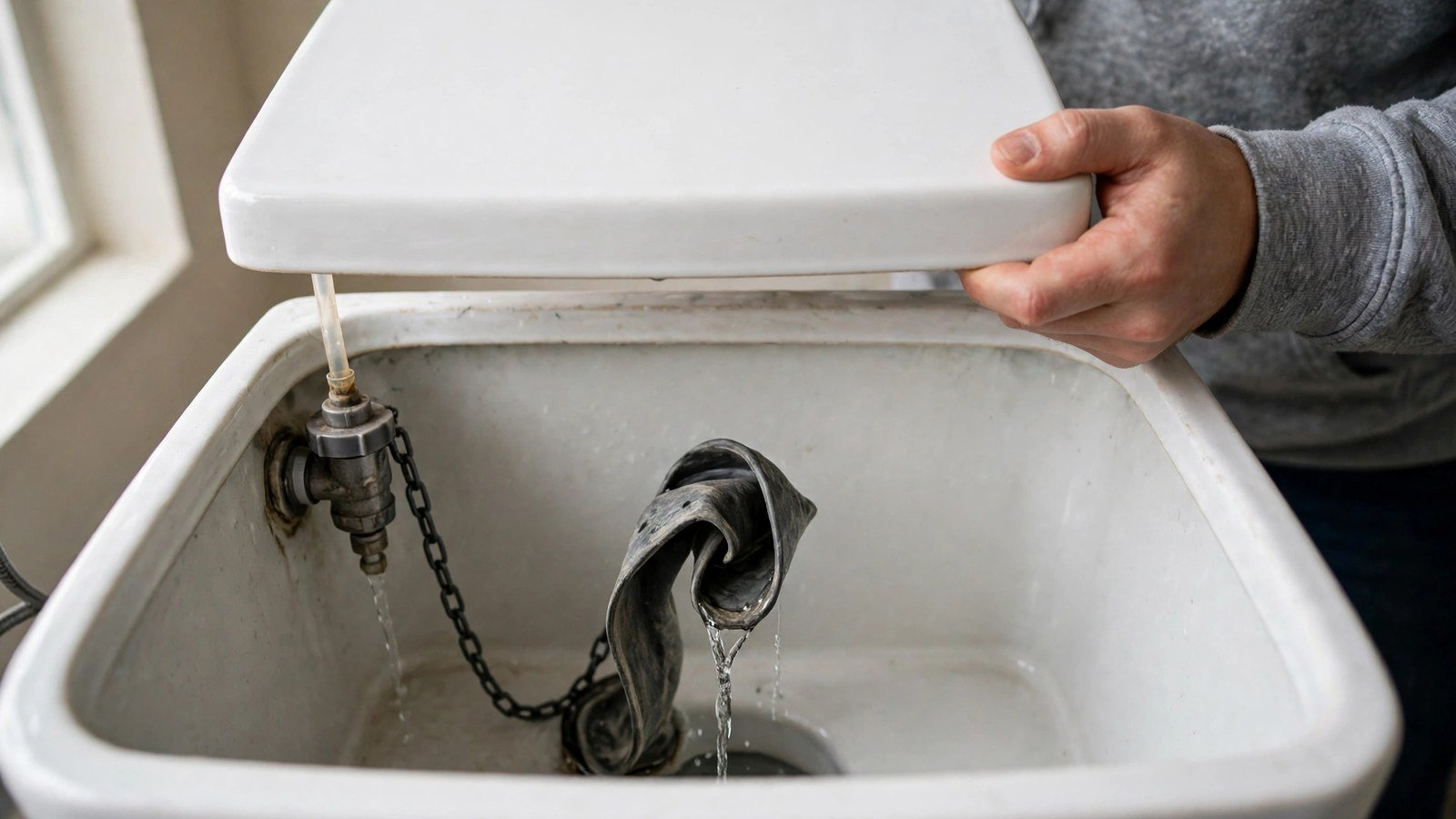
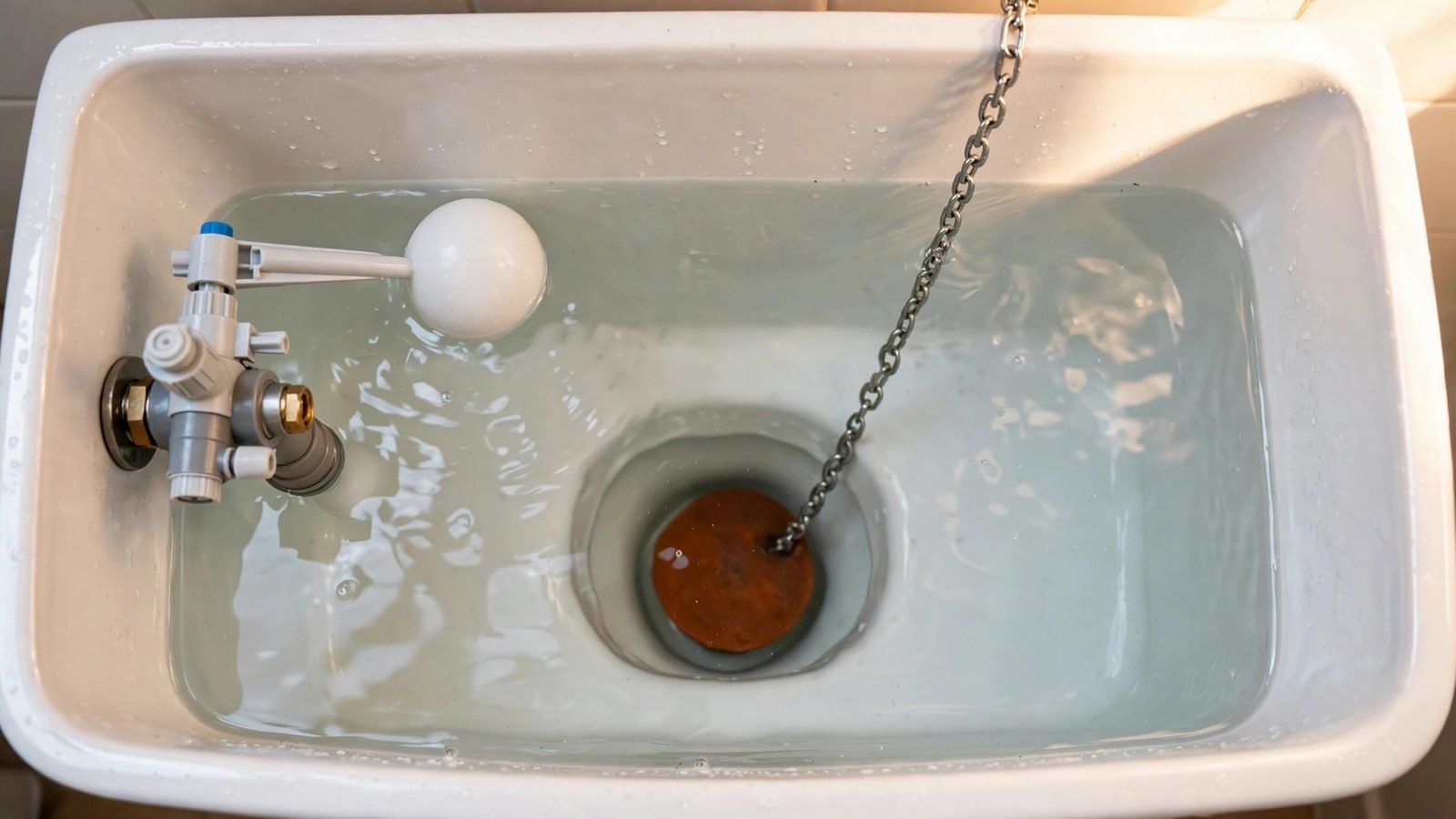
Lift the tank lid and you can see the whole system. The flapper at the bottom holds water in the tank until you flush. The fill valve refills the tank and shuts off when its float rises. A short chain links the handle to the flapper. When a toilet runs, one of those three is nearly always to blame. A warped flapper lets water trickle into the bowl. A chain that is too tight holds the flapper cracked open, and one with too much slack can fold under it. A worn fill valve never fully shuts off, or the float sits so high that water spills down the overflow tube.
Put a few drops of food coloring in the tank and wait fifteen minutes without flushing. Color in the bowl points at the flapper, a $5 to $10 part, and plenty of people handle that themselves with our running toilet guide. When we come out, we rebuild the tank with a new flapper, fill valve, flush valve seal and supply line, which usually runs $99 to $200. Parts that went in on the same day tend to fail one after another.
Phantom flushes and weak flushes
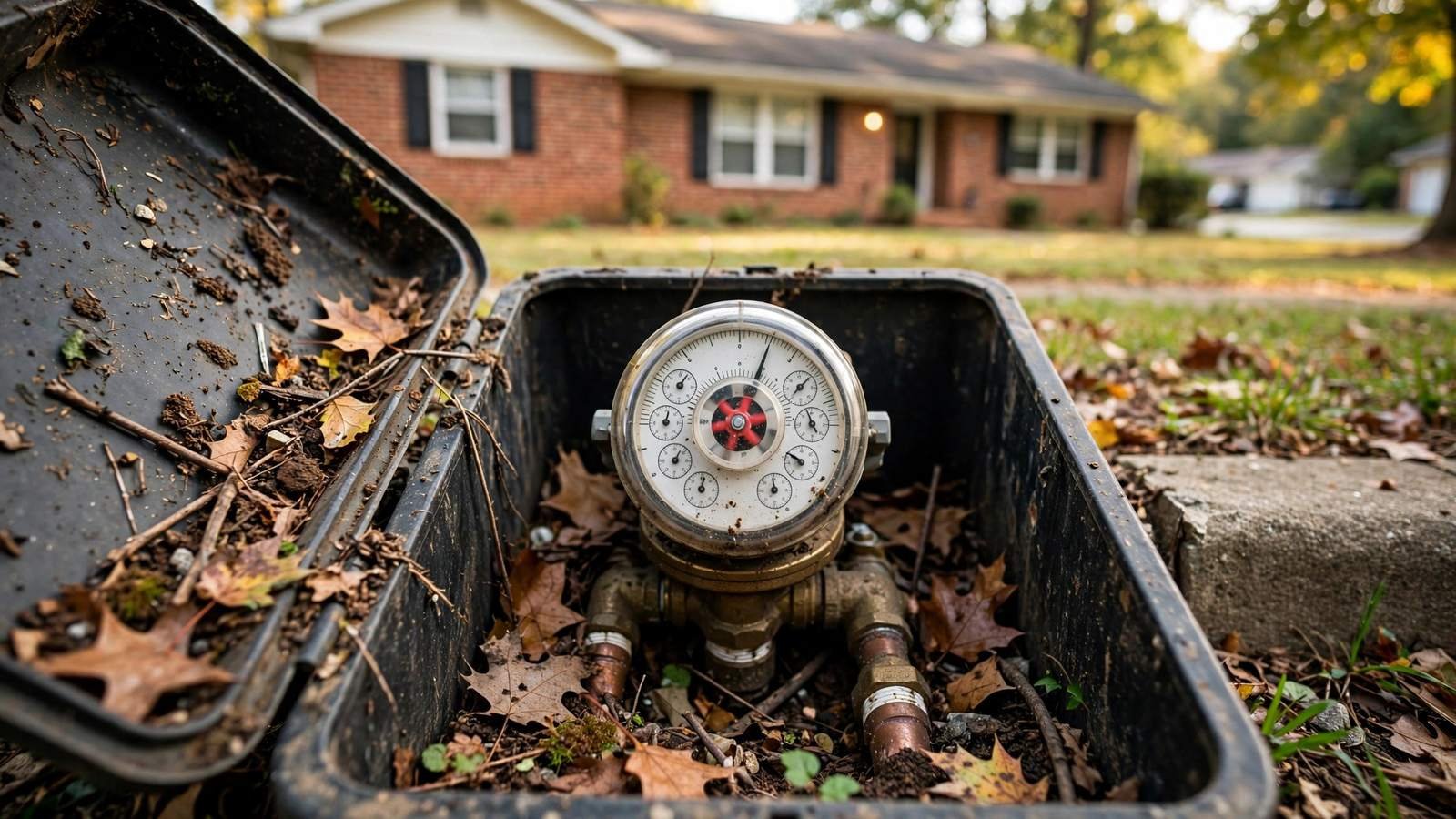
A toilet that refills for a few seconds at 2 a.m. with nobody near it has a slow leak from the tank into the bowl. The level drops until the fill valve kicks on to top it off. It is the same flapper problem, or a pitted flush valve seat under the flapper. You will see it on the Charlotte Water bill too, so if yours jumped for no clear reason, check every toilet before anything else. Our page on high water bills with no visible leak walks through the other suspects.
A weak flush is a different animal. The tank water may be set too low, the flapper may drop shut before the tank empties, or the small rim holes under the bowl edge may be crusted over. Sometimes a partial clog sits in the trapway, like a toothbrush or a wad of wipes, letting water pass slowly but choking a full flush. We check those in that order, cheap fixes first.
Clogs that come back every week

One clog after too much paper is just a clog. A toilet that needs the plunger every week is trying to tell you something. If it only happens at that one toilet, look at something lodged in the trapway, a first-generation low-flow model from the 90s that never flushed well, or trouble in the branch line under the floor. We can pull the toilet and run an auger from the flange to reach what a plunger cannot.
Now, if the tub gurgles when you flush, the downstairs toilet bubbles while the washer drains, or the shower fills with dirty water, the blockage is past the toilet in the main line. In older Charlotte neighborhoods with clay or cast iron sewer laterals and big street trees, roots are a common cause. That calls for main line drain cleaning and often a camera, and a new toilet would not change a thing.
Base leaks, rocking toilets and soft floors
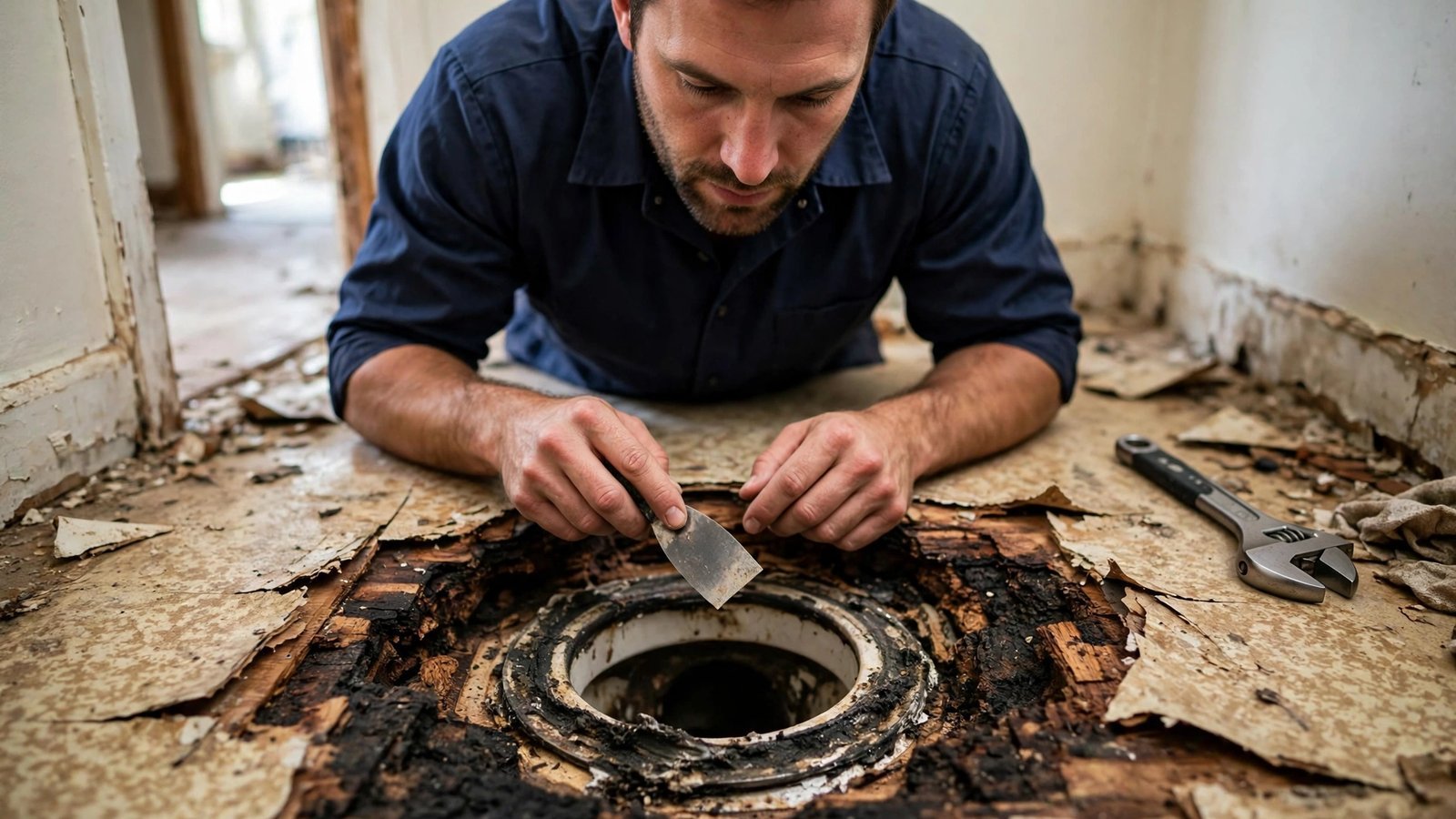
Water around the base after a flush almost always means the wax ring has failed. That ring seals the toilet outlet to the flange in the floor. A toilet that rocks even slightly keeps squashing the wax until the seal breaks, and from then on every flush pushes a little dirty water under the toilet and into the floor. You may not see much on top. The damage is happening underneath.
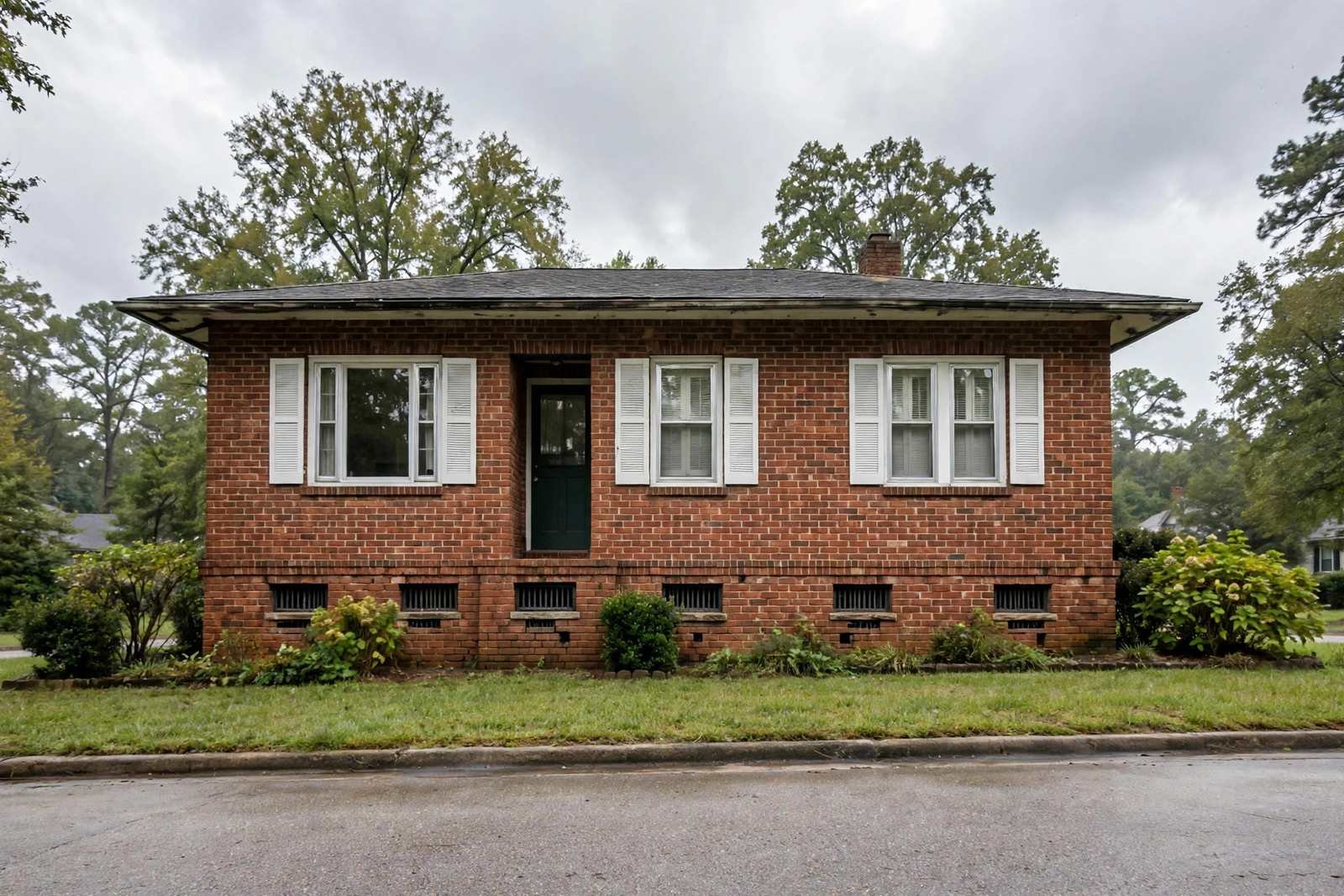
This matters in Charlotte's older homes. Many houses built from the 1940s through the 70s sit over crawl spaces with plank or plywood subfloors, and a slow base leak can rot the wood around the flange for years before the toilet starts to feel soft. If you have a crawl space, we look up from below at the subfloor and joists under the toilet. Small soft spots can usually be cut out and patched, and we repair or replace a cracked or rusted flange so the new wax ring seals against something solid. If the rot has reached a joist, we will show you and lay out the options.
When a new toilet makes more sense
Repair wins most of the time, but not always. We suggest replacing when the tank or bowl is cracked, since even a hairline crack in a tank can let go without warning, when parts for an odd or discontinued model are hard to find, or when the toilet predates 1994 and uses 3.5 gallons or more per flush. A modern 1.28 gallon toilet flushes better than most of those old ones and trims the water bill every month. A new toilet installed generally runs $150 to $400 depending on the model, and if you already picked one out, we can set it through our fixture installation service. Either way, you get a flat price before we start.
Toilet repair questions
How much does it cost to fix a running toilet in Charlotte?
If you do it yourself, a flapper is $5 to $10 and a fill valve is $10 to $25. When we come out, we rebuild the whole tank with a new flapper, fill valve, flush valve seal and supply line, which usually runs $99 to $200. That way the other old parts do not fail a few months later. You get the flat price before we open the tank.
Can a leaking wax ring damage my floor?
Yes, and it is one of the sneakier leaks in a house. A failed wax ring lets a little water out with every flush, and it soaks into the subfloor instead of puddling where you can see it. Over time the wood around the flange gets soft and the toilet starts to rock. Stains on the ceiling below or a soft spot near the base are both signs to call.
Should I caulk around the base of my toilet?
We do, along the front and sides, because it keeps mop water and splashes from getting under the toilet and helps stop small rocking. We leave a short gap at the back on purpose. If the wax ring ever fails, water can seep out there where you will notice it, instead of being trapped under the toilet and rotting the floor.
Why does my toilet keep clogging?
With a single toilet, the usual causes are an object stuck in the trapway, an early low-flow model that never had enough flush, or too much paper or wipes. If other drains act up at the same time, like a gurgling tub or a backed-up shower, the clog is in the main sewer line. That needs the line cleared, and a plunger or a new toilet will not fix it.
Is it worth repairing an old toilet or should I just replace it?
If the porcelain is sound and parts are available, repair is almost always cheaper. Replace it if the tank or bowl has a crack, if it is a pre-1994 model that uses 3.5 gallons or more per flush, or if it keeps clogging even with new parts. A new efficient toilet installed usually runs $150 to $400 and pays some of that back on the water bill.
What Charlotte Homeowners Say
We're new to Charlotte, and we're building our reputation the only honest way there is: one job at a time, done right, at the price we quoted. Every Hornets Nest job comes with flat-rate pricing, a licensed and insured crew, and a real person answering the phone 24/7.
Toilet acting up?
Tell us what it is doing and we will give you a straight answer on repair or replace, with the price before we start.
📞 Call (704) 419-7362