
How much does leak detection cost in Charlotte?
Quick answer
Leak detection in Charlotte usually costs $150 to $450 to find a hidden leak in a wall, ceiling, crawl space, slab or underground water line. The repair is priced separately once the exact spot is found, and you get a flat price before work starts. A running toilet is just a service call.

A hidden leak is annoying in a specific way. You know water is going somewhere. The bill says so, or the meter says so, or a patch of floor feels damp. But there is no drip to point at, and nobody wants a plumber cutting holes in the walls on a hunch.
That is what leak detection is for. You pay to have the leak pinned to a spot a few inches wide before anything gets opened. Here is what that costs in Charlotte, and what usually comes after.
What leak detection costs in Charlotte
| Job | Typical Charlotte price |
|---|---|
| Leak located inside a wall, ceiling or crawl space | $150 to $450 |
| Slab leak located under the foundation | $150 to $450 |
| Underground water line located (meter to house) | $150 to $450 |
| Service call when the cause is a toilet or fixture | $49 to $89 |
| Repair after: toilet tank rebuild | $99 to $200 |
| Repair after: spot fix on an underground water line | $500 to $1,500 |
| Repair after: slab line rerouted through walls or attic | $1,500 to $4,000 |
| Repair after: slab opened and one section fixed | $2,000 to $3,500 |
The finding part sits in the same $150 to $450 band no matter where the leak turns out to be. What moves you up or down inside that band is how hard the leak hides. A pinhole dripping onto the dirt in an open crawl space might take us twenty minutes with a flashlight. A slow leak in a hot water line under tile, in a house on a busy road, takes longer, because traffic and HVAC noise make the listening harder.
The repair is a separate price, and that is on purpose. You should be able to see what you paid to find the leak and what you are paying to fix it. A lot of the time the fix is the cheap part.
Run the free meter test before you book
Before you pay anyone, spend twenty minutes with your water meter. Turn everything off, read the meter, wait, and read it again. Then repeat with the main shutoff at the house closed. We wrote out the whole routine, toilet dye test included, in our post on a high water bill with no visible leak.
The reason we push this is simple. It might save you the visit entirely, because a lot of mystery leaks turn out to be a toilet flapper. And if it does not, it tells us where to start. When you call, tell us two things: did the meter move with everything off, and did it keep moving with the house main closed? If it kept moving, we know to bring the gear for an underground line. That makes the visit faster, and faster usually means you land at the lower end of the range.
How we narrow it down without tearing things up
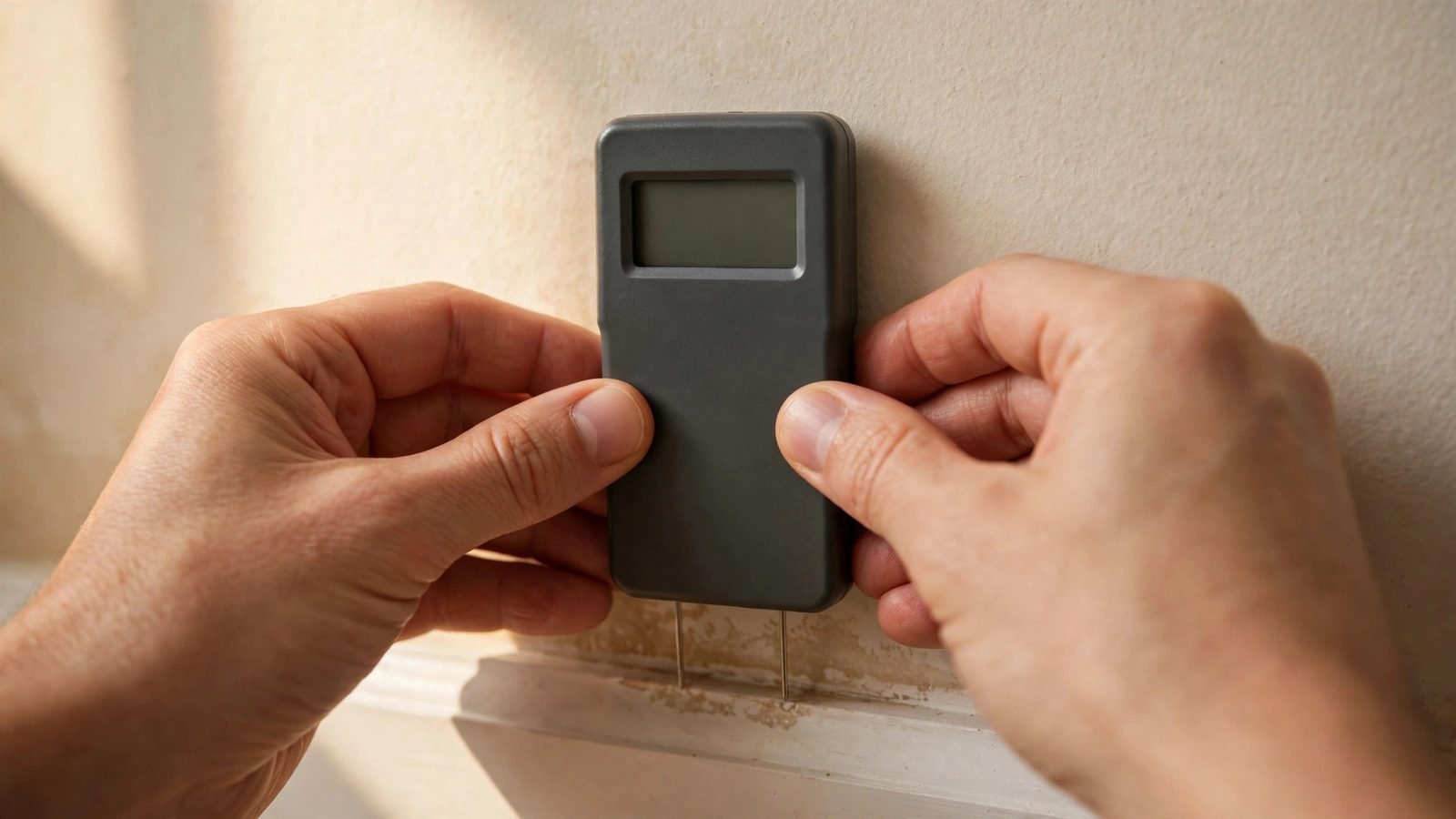
Leak detection is mostly a process of elimination, done in the right order. Here is roughly how a visit goes:
- Confirm the leak. We check the meter and its low-flow indicator ourselves, so we are not chasing a reading from last month.
- Split hot from cold. Shutting off the water heater supply tells us which side is leaking. A hot line leak under a slab often leaves a warm spot on the floor.
- Pressure test sections. Isolating parts of the system with a gauge shows which run is losing pressure.
- Listen and measure. Acoustic equipment picks up the hiss of water escaping under pressure through concrete, soil or a wall. A moisture meter tells us how far the wet area spreads behind drywall or under flooring.
By the end, we can put a piece of tape on the floor or a mark on the wall and say "it is right here." That mark is what you are paying for.
Crawl space, slab or yard line: where it hides changes the bill

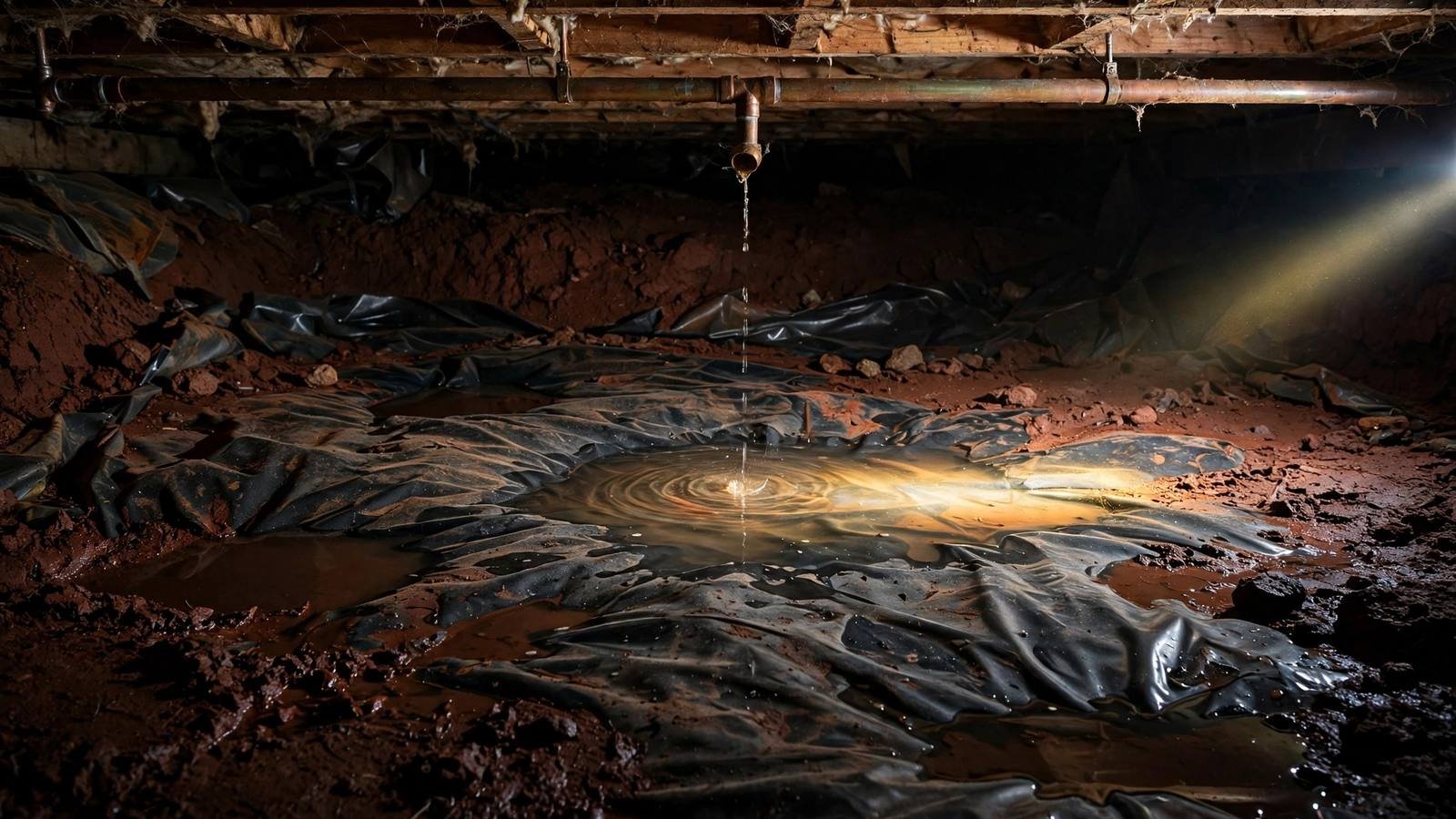
Charlotte has three very different kinds of hidden leaks, and they line up pretty closely with how and when a house was built.
Crawl space houses. The brick ranches in Cotswold, east Charlotte and older parts of Matthews mostly sit on crawl spaces. A leak there drips straight into the red clay, where nobody looks for months. These are usually the quickest to find, since we can get eyes on most of the pipe. The catch is the pipe itself. If it is gray polybutylene from the 80s or early 90s, the leak we find is rarely the last one.
Slab houses. Newer homes in Ballantyne, Steele Creek, Huntersville and Indian Trail are mostly slab-on-grade, with water lines running under the concrete. These take the most work to locate, and they are where precise detection matters most, because the alternative is breaking up a floor to look. Our slab leak repair cost guide covers the repair side in detail.
The yard line. If your meter keeps spinning with the house main closed, the leak is in the line between the meter and your house, and that line is yours to fix. Clues are a strip of lawn that stays soft or greener than the rest, or water pooling in the meter box. We trace it with listening gear from the surface and mark the spot, so the repair is one small hole instead of a trench across the yard.
Why paying to find it first is the cheaper route
Some people balk at paying a few hundred dollars just to be told where the leak is. We get it. But think about what happens without it. A plumber guessing on a slab leak breaks concrete where he thinks the line runs, misses, and breaks it again. A guess inside a wall turns one access hole into three, and every hole is drywall, mud and paint you pay for later.
There is also the time factor. A leak you are still hunting for keeps soaking subflooring and feeding mold in the crawl space, and it keeps running up the water bill every day. Finding it in one visit stops all of that. If your insurer ends up involved, the written detection report showing where the leak was and what caused it is the kind of paperwork an adjuster asks for.
If you have run the meter test and it says water is escaping, call us at (704) 419-7362. We will ask what you saw, give you a flat price, and pin it down. Our leak detection page has more on how we handle the repair once it is found.