
Slab leak detection & repair in Charlotte, NC
A warm patch on the tile, a hiss behind the wall when every tap is off, a water bill that doubled. If your house sits on a concrete slab, those point to a leak under the floor. We pinpoint it without guesswork and fix it the least destructive way that makes sense.
How to tell if the leak is under your slab
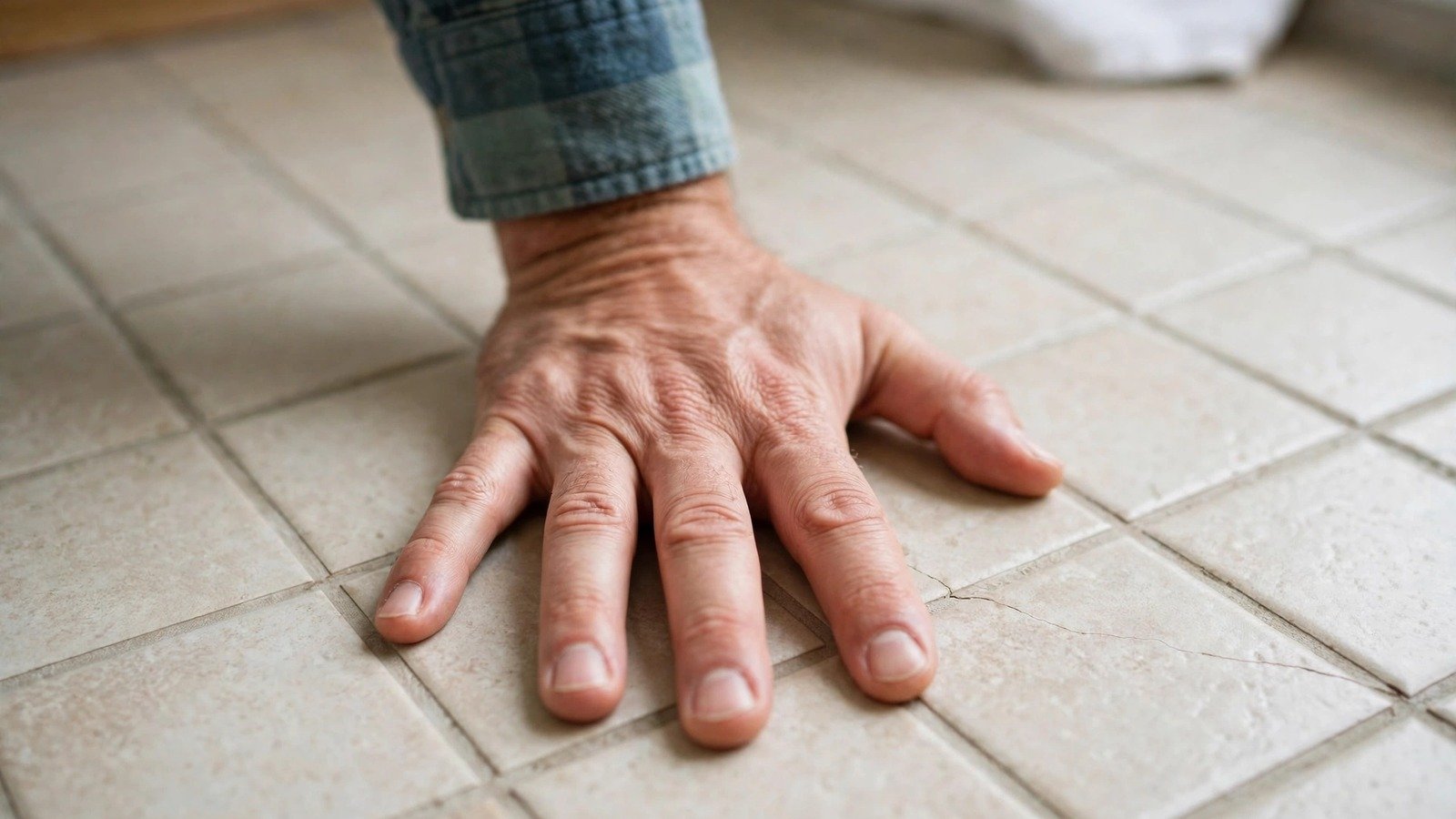
People usually call us after noticing one odd thing and then a second. The common ones:
- A spot on the floor that feels warm under bare feet, often in a kitchen or bathroom. That's a hot water line leaking underneath.
- The sound of water running when nothing in the house is on.
- A water bill that jumped and stayed up.
- New hairline cracks in tile or grout, or hardwood that's started to cup.
- Carpet that's damp along a wall with no plumbing fixture near it.
You can check this yourself in five minutes. Shut off every faucet, the ice maker, and the irrigation. Then go look at the meter, usually in a box near the street. Most have a little triangle or star dial that spins with even a slow flow. If it's turning with everything off, water is going somewhere. Write down the reading, wait an hour without using water, and check again. A change means a leak, and on a slab house, under the concrete is high on the list.
Finding it before anyone breaks concrete
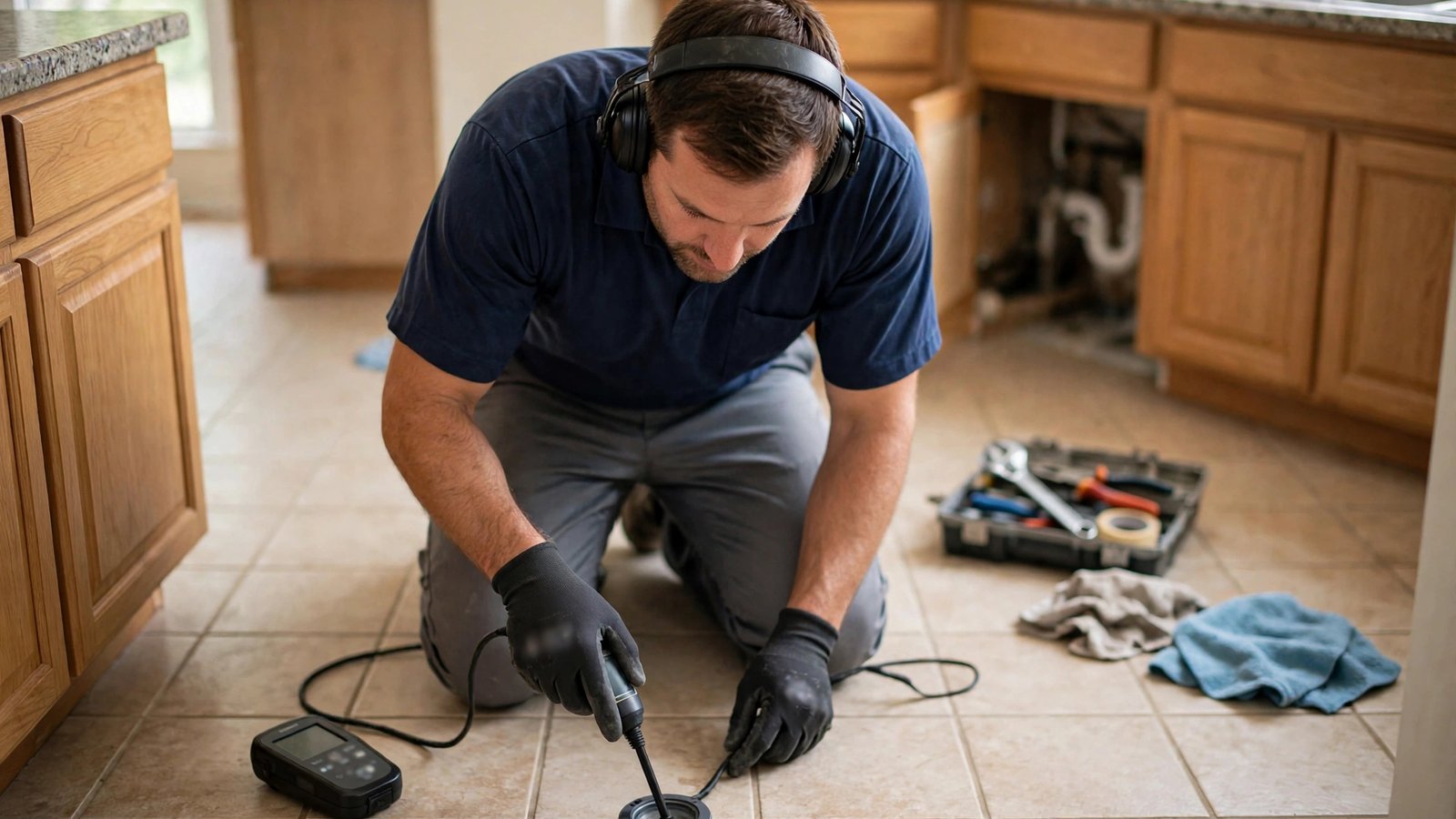
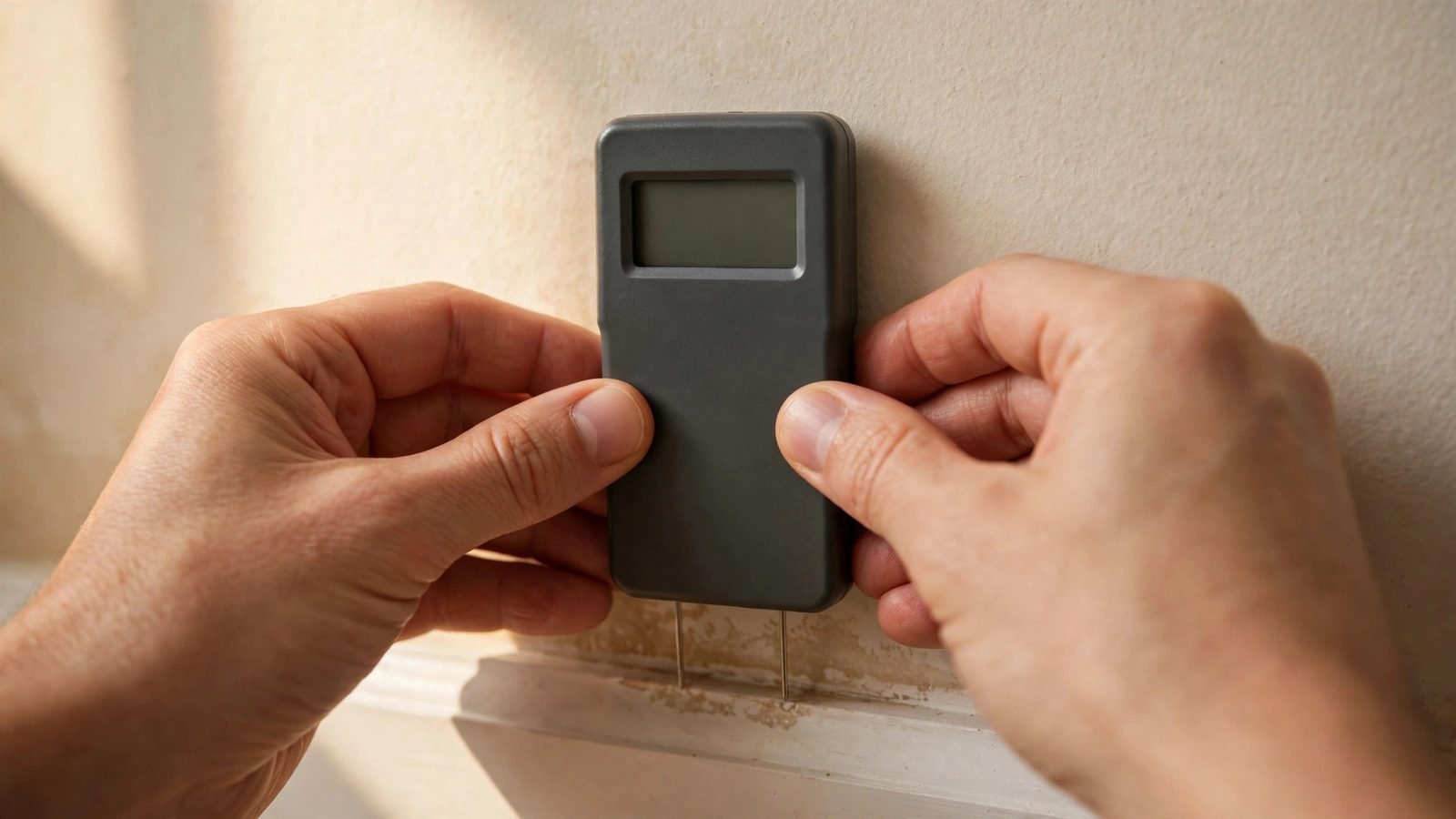
The worst way to handle a slab leak is to start jackhammering where the floor feels wet. Water travels along the pipe and under the slab, so the damp spot and the actual hole can be ten feet apart. We locate it first.
We start by isolating hot from cold. If the meter only moves with the water heater's supply open, it's a hot line, and that narrows things down fast. Then we pressure test each side. To find the exact spot, we use an acoustic listening device: a sensitive ground microphone that picks up the hiss of water escaping under pressure through concrete and flooring. We work across the floor until the sound peaks. On hot lines, a thermal camera helps too, since leaking hot water shows up as a warm bloom on the screen. Between the two, we can usually mark the leak within a foot or so. Locating typically runs $150 to $450.
Three ways to fix it
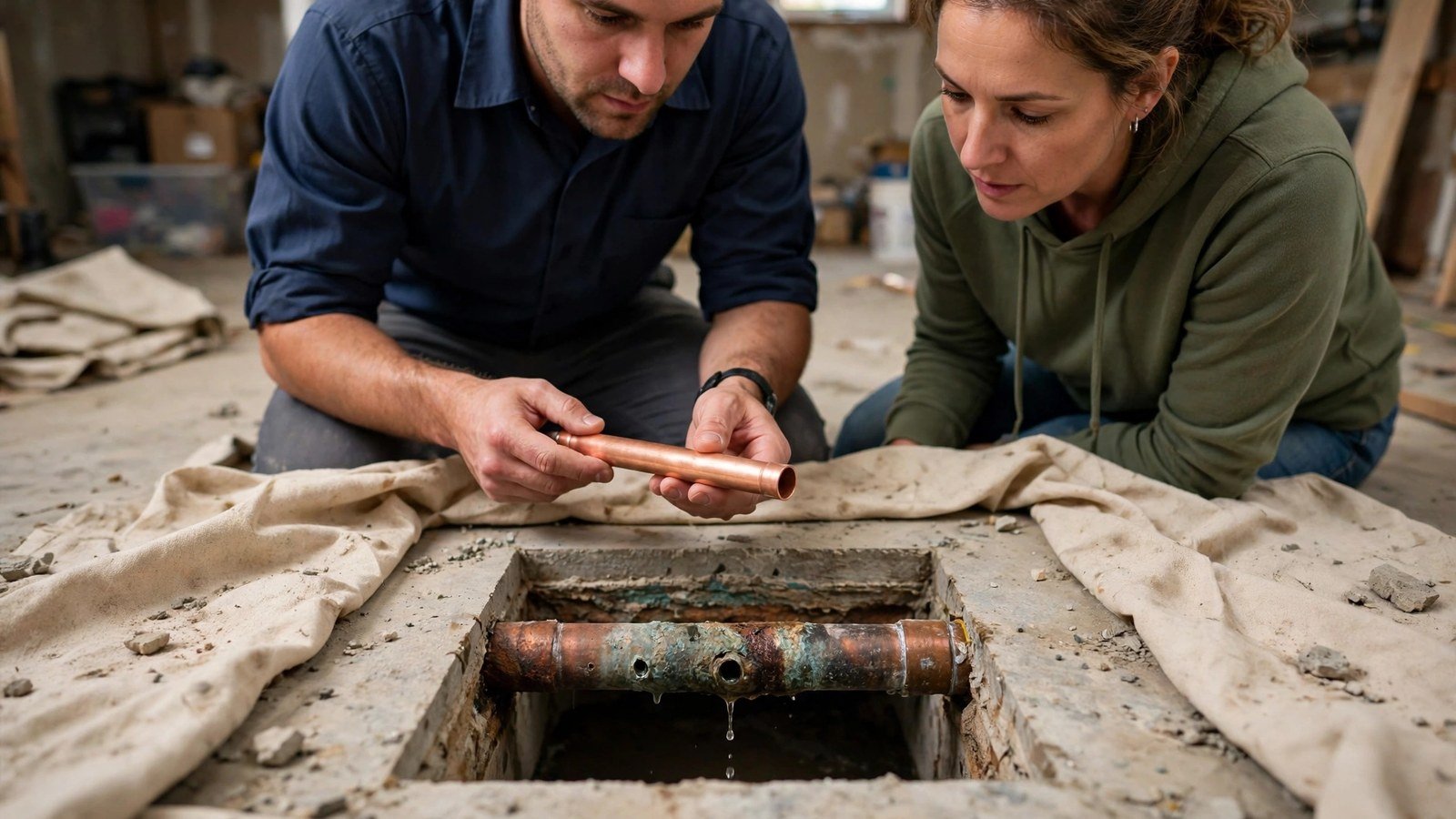
Spot repair. We cut a neat opening in the slab right over the leak, dig down to the pipe, replace the bad section, pressure test it, and patch the concrete. This makes sense when the rest of the pipe is in decent shape. Expect roughly $2,000 to $3,500. Flooring over that spot will need repair afterward.
Reroute. Instead of going under the floor, we abandon the leaking run and bring a new line through the walls or across the attic, usually in PEX. Often this is the better choice, since nobody's tearing up your tile and the new line is somewhere it can be reached later. It typically costs $1,500 to $4,000. In a two-story home with finished ceilings the routing gets trickier, and we'll tell you up front if that pushes the price.
Repipe. If this is your second or third slab leak, or the pipe is old enough that the next failure is just a matter of time, a whole-house repipe overhead in the $4,000 to $8,000 range ends the cycle. We'll give you prices for more than one option so you can compare.
Slab foundations around Charlotte
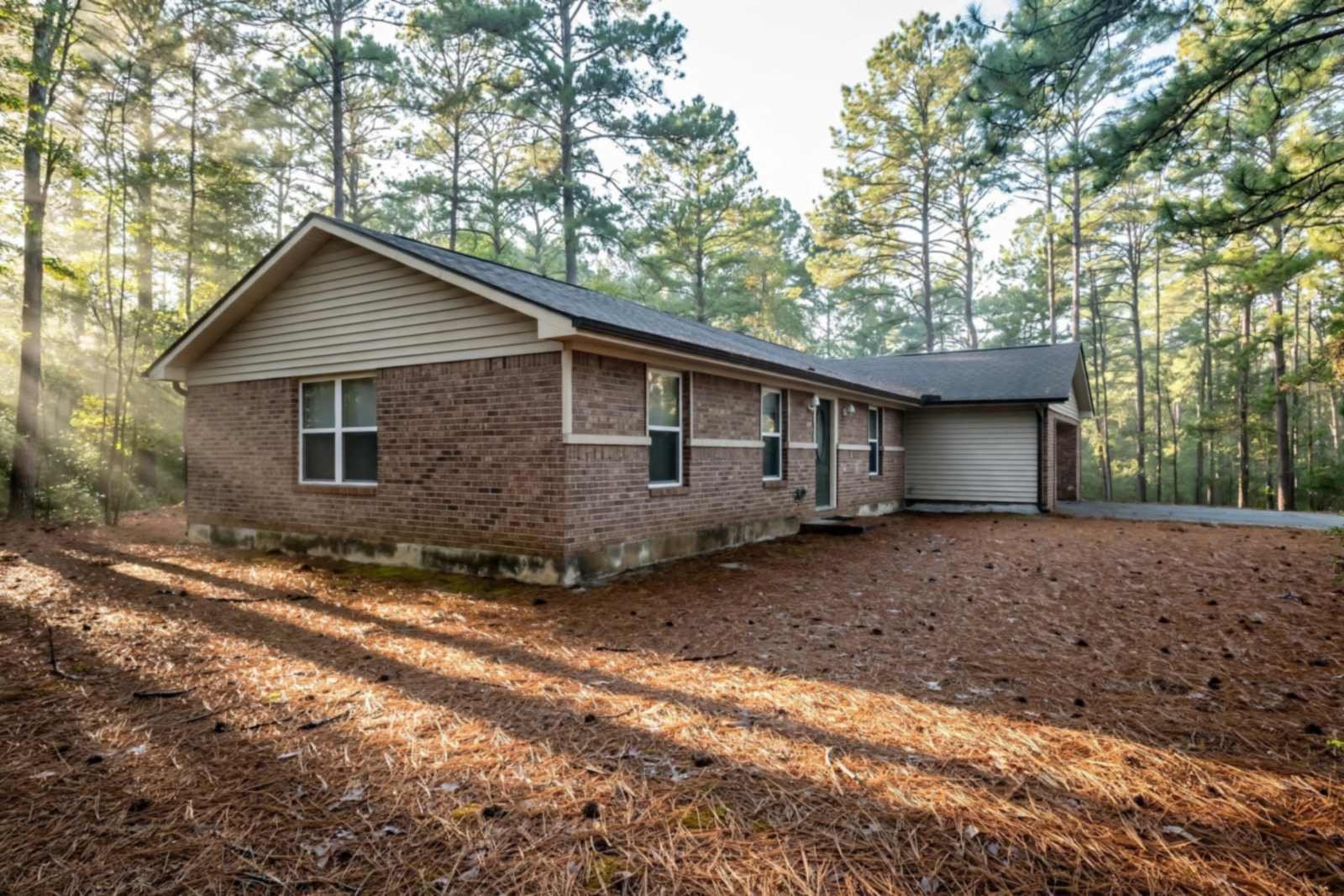

In-town Charlotte is mostly crawl space houses, where a leak drips into red clay and we can crawl right to it. The suburbs that boomed from the 90s on are a different story. Huntersville, Indian Trail, Fort Mill, and plenty of south Charlotte subdivisions have lots of slab-on-grade homes, with the supply lines buried in sand under the concrete.
Those lines tend to fail for a couple of reasons. Copper can wear thin where it rubs against gravel or concrete as the house expands and contracts, and the hot line takes the worst of it. Some builders also ran long buried runs with fittings under the slab, and a joint down there is a weak point. If your home is in one of those neighborhoods and you're seeing the signs above, call this week. Water trapped under concrete has nowhere to go except up into your floors.
Insurance, in plain terms
Policies vary a lot here. Many homeowners policies will pay for the water damage from a sudden slab leak and the cost of breaking into the floor to reach the pipe. Most don't pay to replace the worn-out pipe itself. Damage from a leak that clearly ran for months is usually denied, and a few policies leave slab leaks out entirely. Call your agent early. We'll give you a written report of where the leak was and what caused it, along with photos and an itemized invoice, which is what adjusters ask for. You get a flat price from us before any work starts either way. For the full cost breakdown, read our slab leak repair cost guide.
Slab leak detection & repair questions
How much does slab leak repair cost in Charlotte?
Finding the leak usually runs $150 to $450. A spot repair through the slab is about $2,000 to $3,500, rerouting the line through walls or the attic about $1,500 to $4,000, and a full repipe $4,000 to $8,000. Flooring repair over a spot repair is extra. We quote a flat price after locating the leak.
Is a slab leak an emergency?
A fast leak is. If the meter is spinning hard, water is coming up through the floor, or you hear a steady rush, shut off the main and call right away. A slow leak isn't a middle-of-the-night emergency, but don't let it sit for weeks. The longer it runs, the more it soaks the subgrade and the flooring above it.
Can a slab leak damage my foundation?
It can. A leak that runs for months can wash out or saturate the soil under part of the slab, and that can lead to settling and cracks. Most leaks we find early never get to that point. That's the best reason to check your meter when the bill jumps rather than waiting to see if it goes away.
Is it better to reroute or repair under the slab?
It depends on the house and the pipe. A single leak on otherwise good pipe in an easy spot is a fine candidate for spot repair. If the leak sits under expensive tile, or the pipe is aging, rerouting through the walls or attic is often cheaper overall and leaves the new line where it can be reached later.
Does homeowners insurance cover slab leaks?
Often in part. Many policies cover the resulting water damage and the cost of accessing the pipe, but not the pipe repair itself. Long-running leaks are commonly denied, and some policies exclude slab leaks. Report it promptly, take photos, and keep the leak detection report and invoice for your claim.
What Charlotte Homeowners Say
We're new to Charlotte, and we're building our reputation the only honest way there is: one job at a time, done right, at the price we quoted. Every Hornets Nest job comes with flat-rate pricing, a licensed and insured crew, and a real person answering the phone 24/7.
Meter spinning with everything off?
Call us and we'll come find the leak, show you where it is, and price out every repair option before anything gets cut.
📞 Call (704) 419-7362